By Dr Hasnain Walji
Two neighbours. One extraordinary historical figure. And an unexpected journey from researching history to bringing it alive in 75 minutes of theatre.
A Neighbour’s Audacious Idea
It is not every day that a neighbour approaches you with a proposal to put Muhammad Ali Jinnah on an American stage.
But then, Siraj Narsi is no ordinary neighbour.
When my friend first shared his idea, I wondered whether he fully appreciated what he was proposing. Just 75 minutes of theatre to capture the life of a man whose political career helped change the map of the world?
It sounded ambitious. Perhaps even a little reckless.
Which, I suppose, is why I found myself drawn into it.
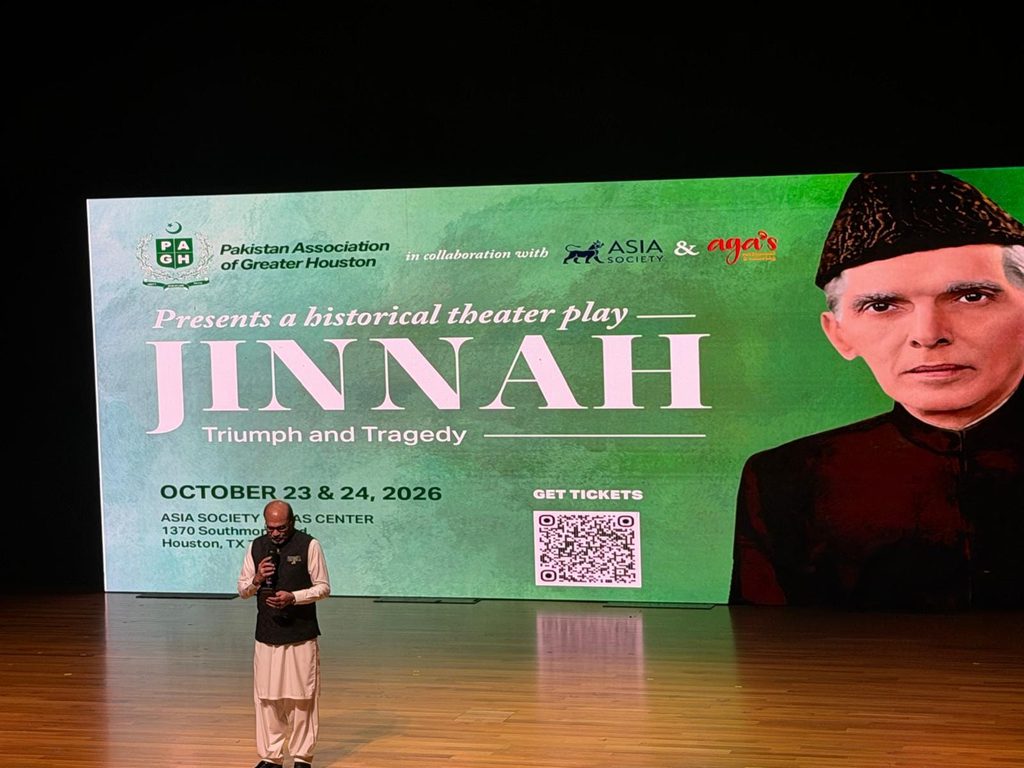
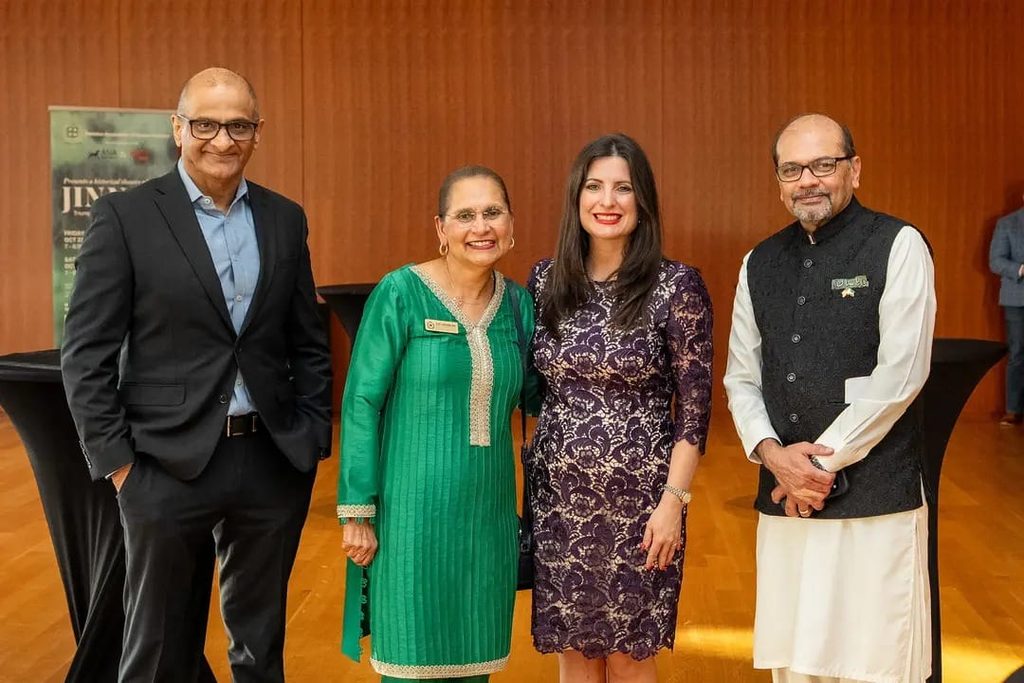
As President of the Pakistan Association of Greater Houston (PAGH), Siraj was considering how best to mark Jinnah’s 150th birth anniversary on December 25, 2026.
He could have chosen the familiar route. A commemorative dinner. A few distinguished speakers. Photographs for the community archives. A respectable evening, organised at modest expense, and a perfectly meaningful tribute to Pakistan’s founding father.
But Siraj wanted more than a commemoration. He wanted audiences to discover the human being behind the national icon.
We have grown accustomed to seeing Jinnah as Quaid-e-Azam, the towering statesman whose determination helped create Pakistan. Yet monuments seldom reveal the private lives of those they commemorate.
Siraj envisioned a production that would explore Jinnah as a husband, brother, and individual whose public triumphs unfolded alongside complicated relationships, personal disappointments, and declining health.
He also wanted to stage the play at Asia Society in Houston, introducing Jinnah to audiences beyond the Pakistani diaspora.
For him, this was a legacy project.
For me, the invitation presented an unexpected creative challenge.
I had spent years working with history through research, essays, and documentary storytelling. I was accustomed to examining sources, weighing interpretations, and constructing arguments that could withstand scrutiny.
Now I was being asked to transform that scholarship into something entirely different.
A living drama.
History would have to speak, argue, love, hesitate, and occasionally fall silent before an audience.
I was intrigued.
And considerably less prepared than I imagined.
From Kharadar to the Corridors of Power
One aspect of Jinnah’s life particularly fascinated us both.
How did a boy born into a Gujarati-speaking Khoja merchant family in Karachi emerge, through education, ambition, and extraordinary discipline, as a barrister capable of challenging the finest legal minds of the British Empire?
Here was a young man who travelled to London, studied at Lincoln’s Inn, mastered the language of colonial authority, and transformed it into an instrument of political persuasion.
His eloquence rested not on rhetorical extravagance but on precision, clarity, and disciplined reasoning. He could expose the weaknesses of an argument with remarkable economy.
Yet what intrigued me was not simply his mastery of English.
Having spent much of my life exploring the journeys of the Khoja diaspora, I felt a particular connection to this young man from Karachi.
His story raised a question that went well beyond language or education.
How did someone from this distinctive community come to articulate the political aspirations of millions whose languages, customs, and social worlds were so different from his own?
I found myself increasingly fascinated by the widening of his identity and political horizons.
From the particular cultural world of a Gujarati Khoja family, Jinnah emerged as a national political personality whose decisions would reshape the subcontinent.
The historian in me wanted to understand that transformation.
The emerging playwright in me faced a more difficult question.
How could we make an audience experience it?
Learning to Think Beyond the Historical Record
When Siraj and I began developing the screenplay, I approached the assignment with the instincts of a historian.
I wanted evidence. Context. Nuance. An appreciation of competing interpretations.
Theatre, I soon discovered, makes rather different demands.
A historian can devote pages to explaining a constitutional disagreement. A playwright may have only a few lines of dialogue to reveal its significance.
The historian seeks to explain. The dramatist must also engage the emotions.
Working from the original dramatic vision of Nadeem Shahid, the Pakistani playwright associated with Ajoka Theatre, we began translating a complex historical journey into a theatrical narrative.
The screenplay became the essential spine of the production, providing a historically grounded framework within which theatrical imagination could operate.
But discovering that balance was not straightforward.
Every scene presented a choice.
What historical information was indispensable? What could be conveyed through conflict rather than explanation? Which events revealed something essential about Jinnah’s character? And which, however fascinating, would merely slow the drama?
Our problem was not a shortage of material.
There was far too much of it.
The real challenge was deciding what to leave out.
We sometimes spent hours refining a single scene. On one memorable occasion, an entire writing session disappeared into a debate over one sentence of dialogue.
Was it historically defensible? Would Jinnah have expressed himself that way? Did it capture the political tension of the moment? Would an actor deliver it convincingly?
A sentence that appeared perfectly respectable in a historical essay could sound painfully artificial when spoken onstage.
This was a new kind of discipline.
I had to resist the temptation to explain every political argument, qualify every interpretation, and provide the historical background that would ordinarily accompany my writing.
At first, leaving things out felt uncomfortable.
Gradually, I realised that omission was not necessarily a failure of scholarship. In theatre, it could become an act of artistic judgment.
I had spent much of my writing life searching for the right words.
Theatre taught me when to leave them out.
A carefully chosen exchange could accomplish what several pages of explanation could not. A pause might reveal hesitation. An unfinished sentence could expose a conflict that a speech would only explain.
I began to understand that dramatic writing required a different kind of trust.
Trust in the actor.
Trust in the audience.
And trust that the emotional truth of a moment could emerge without the writer explaining everything.
The Making of a Political Transformation
Perhaps our most demanding intellectual challenge was tracing Jinnah’s evolution from Indian nationalist to the foremost advocate of Pakistan.
How did a man once celebrated as an ambassador of Hindu-Muslim unity come to champion the idea of a separate Muslim nation?
We could not simply leap from the Lucknow Pact of 1916, when Jinnah championed constitutional cooperation between Congress and the Muslim League, to the Lahore Resolution of 1940, which signalled a profound change in the League’s political aspirations.
The intervening years mattered.
The breakdown of political understandings, constitutional disagreements, competing visions of representative government, and changing ideas about Muslim political identity all contributed to Jinnah’s reassessment of India’s future.
Yet a 75-minute production offered neither the time nor the luxury of explaining every development.
We had to identify the turning points that revealed the changing logic of his political decisions.
This required more than selecting dates.
It required us to consider what Jinnah might have understood at each particular moment, what alternatives appeared possible, and why his position evolved.
The temptation was to write backwards from 1947, making every earlier development appear to point inevitably towards Pakistan.
We resisted that temptation.
The Jinnah of 1916 could not have known where the struggles of the following three decades would lead.
Our intention was to illuminate the interplay of conviction, political pragmatism, constitutional disappointment, and changing circumstances without pretending to resolve every historical debate.
The creative challenge became one of perspective.
Could we allow the audience to witness a political decision before its eventual consequences were known?
Could we make familiar historical events feel uncertain again?
For me, these questions changed the nature of the writing.
I was no longer simply arranging historical milestones.
I was attempting to reconstruct the choices confronting a man who had to act without knowing how history would judge him.
Historical personalities do not know the endings of their own stories.
Neither should we write as though they did.
Discovering the Private Jinnah
There was another dimension of the screenplay that challenged me in unexpected ways.
I had approached Jinnah primarily through his constitutional arguments, political strategies, and extraordinary command of public discourse.
But the stage demanded that we look beyond those achievements.
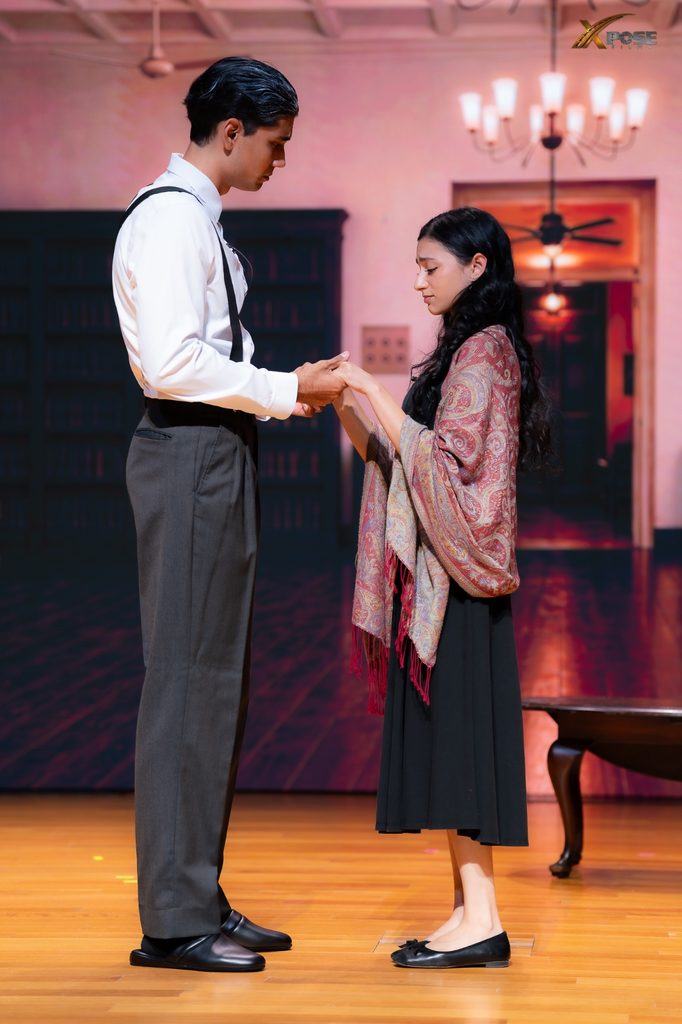
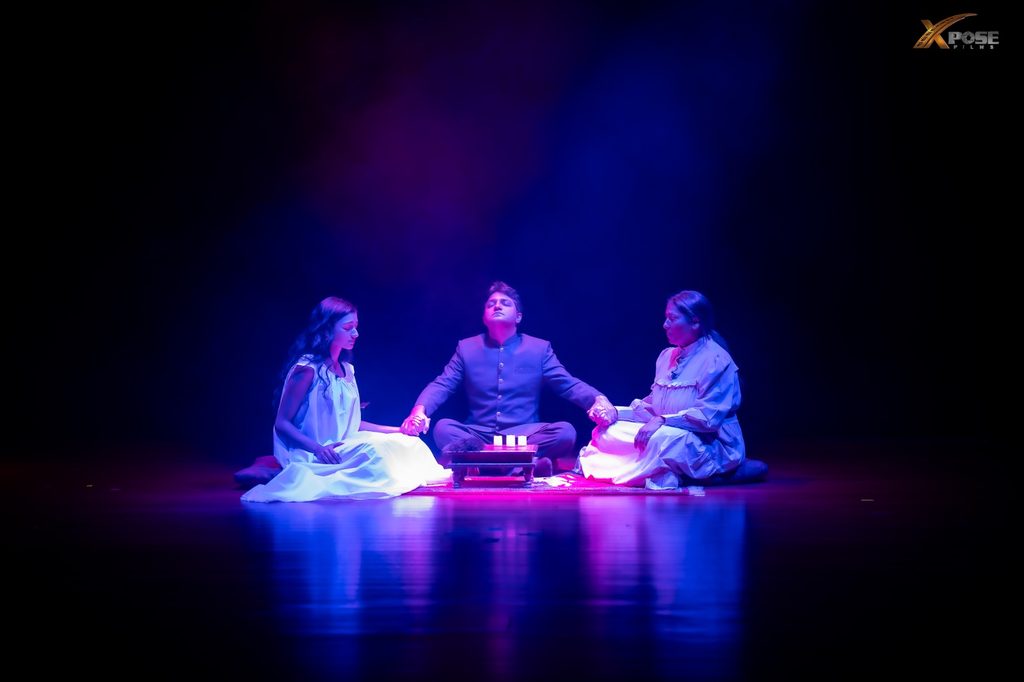
There was Rattanbai Petit, affectionately known as Ruttie, whose romance with Jinnah defied religious and social conventions. Their marriage began with promise but eventually deteriorated, leaving estrangement and heartbreak.
There was Fatima, his steadfast sister, who remained a source of companionship through the increasingly demanding years of his political career.
And there was the physical vulnerability of a man whose declining health contrasted so sharply with his formidable public resolve.
Here was a leader capable of negotiating the political future of millions, yet whose personal relationships were not immune to distance, disappointment, and unresolved tensions.
These intimate experiences presented a different challenge from writing constitutional debates.
How does one portray loneliness without inventing emotions that historical evidence cannot establish?
How does one suggest affection or estrangement without turning private lives into melodrama?
And how does one humanise a monumental political figure without diminishing the significance of his achievements?
We were not interested in putting Jinnah’s private life on trial.
We wanted to explore the vulnerabilities that official historical portraits so often conceal.
For me, this required a shift in perspective.
Instead of asking only what Jinnah accomplished, I began asking what his relationships revealed about the person living through those accomplishments.
The private story was not a distraction from the political narrative.
It was another window into the man.
When the Words Left the Page
Nothing quite prepared me for the experience of seeing the screenplay move from the writing table to the stage.
For months, Siraj and I had lived with these historical personalities as words on a page.
We had debated their motivations, refined their arguments, and imagined how particular encounters might unfold.
Then the actors took possession of those words.
A sentence debated endlessly around a writing table became an exchange delivered in seconds.
A historical disagreement became a confrontation between living personalities.
And a figure familiar through photographs, biographies, and correspondence began to speak, move, and reveal emotion.
It was both exhilarating and humbling.
I discovered that a screenplay is not a finished theatrical creation.
It is the beginning of a collaboration.
Actors bring interpretations that a writer may never anticipate. A director discovers possibilities that are not immediately apparent on the page. A pause or gesture can change the emotional weight of an entire exchange.
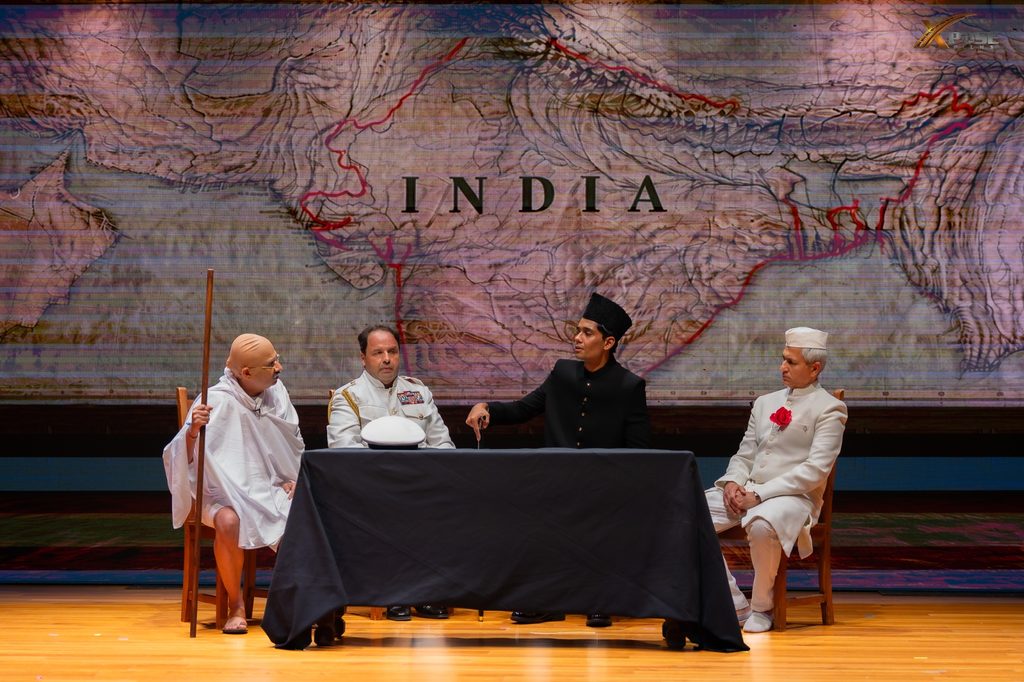
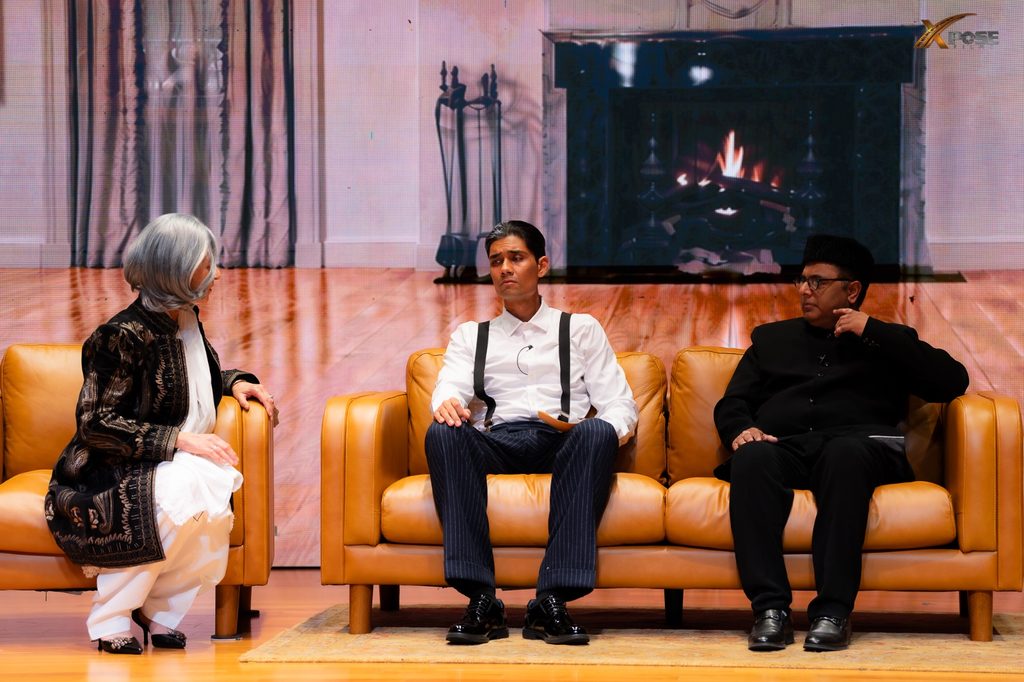
Under the direction of Umar Farooq, Jinnah: Triumph and Tragedy brought together historical drama, intimate relationships, and innovative visual technology.
Among the production’s most striking achievements was its visual design.
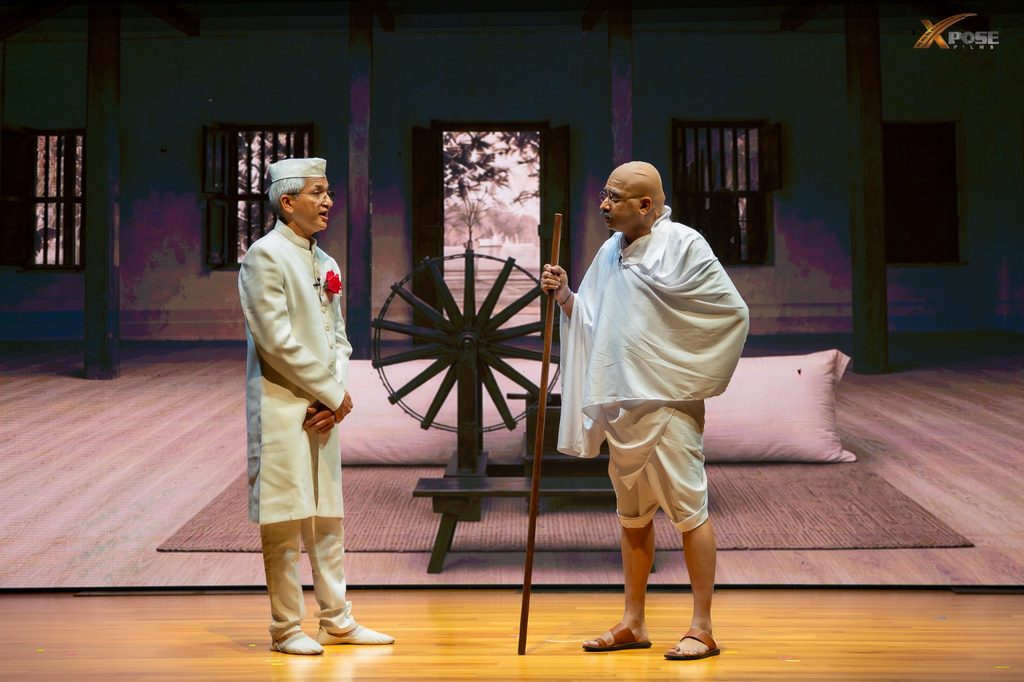
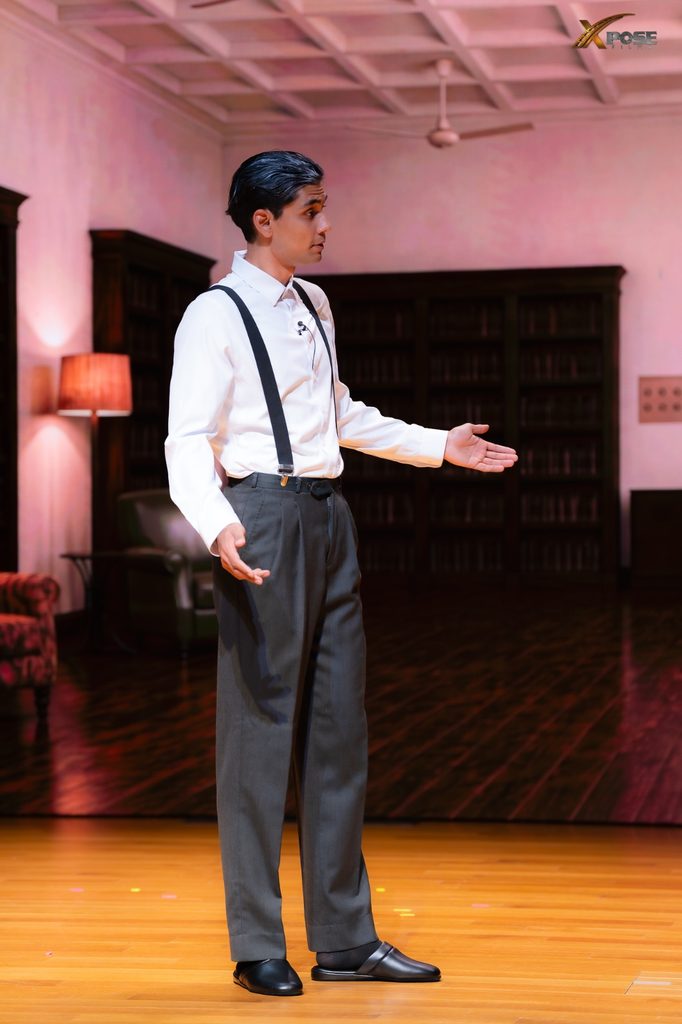
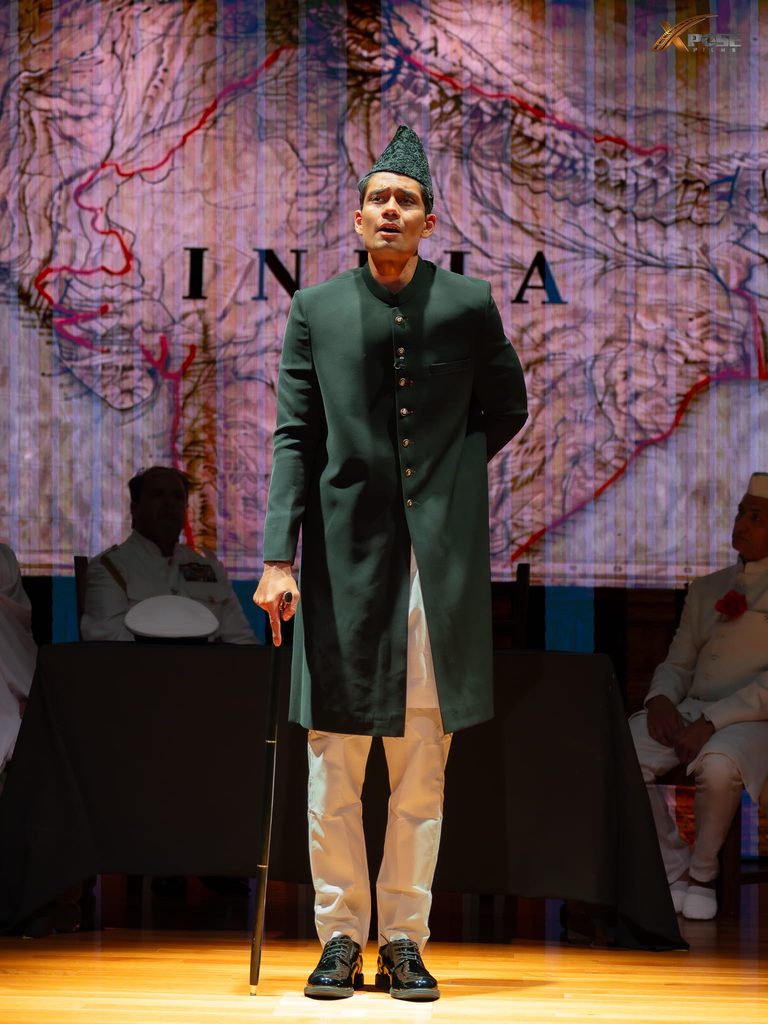
Director Umar Farooq and producer Shahid Iqbal demonstrated remarkable imagination in creating AI-generated historical backdrops that transformed the stage into a succession of atmospheric settings.
The images did more than establish time and place. They gave the production depth and cinematic sweep, transporting audiences across decades without interrupting the intimacy of live performance.
Their achievement lay in making technology an effective partner in the drama. The visuals enlarged the world in which the story unfolded while allowing the actors to remain its emotional centre.
Daniyal Bahalim carried the responsibility of portraying Jinnah from youthful ambition to the physical vulnerability of his final years. The role demanded the authority of a constitutional strategist alongside the emotional restraint of a man whose private life was far less assured than his public persona.
Yusra Qarni, as Ruttie, brought an intimate dimension to the narrative, while Uzma Vahid, portraying Fatima Jinnah, represented the enduring strength of familial loyalty. I would have welcomed a fuller exploration of that remarkable sibling relationship.
The political world was populated by Sunny as Mahatma Gandhi, Syed Adnan Bashir as Jawaharlal Nehru, Syed Javed Abbas Naqvi as Liaquat Ali Khan, and Syed Aamir Masood as Lord Mountbatten.
Shazia Iqbal portrayed Sarojini Naidu, with Mohammed Anas appearing as Ali and Mahru Nadim as Sarah.
The contributions of voiceover artist Arif Bahalim, stage manager Shezi Shaikh, and producer Shahid Iqbal helped support the production’s considerable dramatic and technical demands.
For me, the most revealing moments were those in which the actors communicated something beyond the literal words of the screenplay.
A pause could suggest reluctance.
A glance could disclose affection.
A moment of silence could express emotional distance more eloquently than dialogue.
As a historian, I had been concerned with what the characters said.
As a participant in theatre, I began to appreciate what they could communicate without saying anything at all.
The screenplay provided the framework.
But the performance belonged to the entire creative ensemble.
The Vision and the Will to Deliver
Siraj’s responsibilities extended well beyond our work on the screenplay.
As Executive Producer, he had to turn an ambitious concept into a finished production.
He assembled a diverse creative team, mobilised sponsorships and resources, coordinated technical expertise, and navigated the competing demands of writers, actors, directors, producers, and AI developers.
While I could spend an evening worrying about whether Jinnah would have used a particular word, Siraj had to worry about an entire cast, technical rehearsals, funding, schedules, and the inconvenient certainty that opening night would arrive whether we were ready or not.
Keeping creative personalities working towards a common objective requires patience, diplomacy, and considerable determination.
Siraj’s achievement was to sustain the original vision while managing the practical realities that might easily have overwhelmed it.
What began as an ambitious conversation between neighbours had become a collective artistic undertaking.
What the Journey Changed
When Siraj first invited me into this project, I imagined contributing some historical research, helping shape the screenplay, and returning to my other commitments.
I should have known better.
What followed were evenings of debate, discovery, occasional disagreement, and more revisions than either of us cares to remember.
But somewhere along the way, the project began changing how I thought about historical storytelling.
I had entered it believing that the writer’s responsibility was to explain the past as faithfully and completely as possible.
I emerged with a deeper appreciation of how history could be communicated through dramatic choices, human relationships, and the expressive possibilities of performance.
That did not diminish my respect for historical evidence.
It made me more conscious of the different ways in which people encounter and understand history.
Jinnah remains a contested figure. His decisions and their consequences continue to inspire admiration, criticism, and historical debate.
Our production could not resolve those disagreements, nor did we intend it to.
We wanted audiences to encounter Jinnah within the uncertainties of his own time, recognising both the significance of his public decisions and the complexity of his personal life.
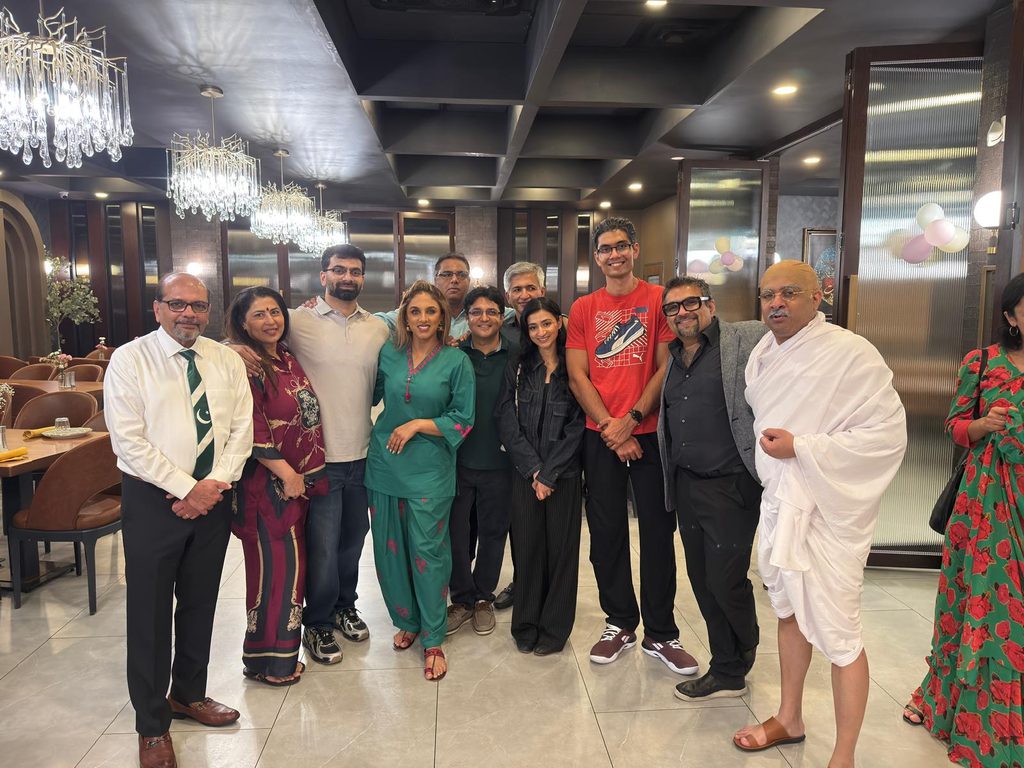
I remain grateful to Siraj for drawing me into this creative journey and to the director, cast, producer, technical team, sponsors, and volunteers whose dedication brought the production to life.
What began as a conversation between two neighbours in Houston took us from Karachi’s Kharadar neighbourhood to London’s Lincoln’s Inn, through the political struggles of British India, and finally back to an American stage.
Along the way, I gained something I had not anticipated.
A different appreciation of the historian’s craft.
A deeper respect for the collaborative imagination of theatre.
And a more intimate understanding of Muhammad Ali Jinnah.
We began with Quaid-e-Azam, the monumental figure familiar to generations.
We ended with the complex human being behind that familiar image.
We did not seek to bring Jinnah down from his pedestal.
We wanted to bring him closer to us.
About The Writer: Dr Hasnain Walji is a writer, historian, and documentary filmmaker with a particular interest in South Asian history and Khoja heritage. He is co-screenwriter of Jinnah: Triumph and Tragedy.