By: Siraj Narsi
Houston, Texas
The 250th anniversary of the United States is a unique occasion to revisit both our founding ideals
and the profound opportunities missed such as the exclusion of African Americans and other
minorities from the original promise of “all men are created equal.” For me, as a South Asian
American, this milestone prompted a personal search for my own community’s participation in
the American story. This quest began at a primary election meeting in the most ethnically diverse
Fort Bend County of Texas, where both African American and South Asian men and women
candidates for various public offices were present. Their presence sparked a discussion on
women’s suffrage, civil rights and inclusion, recognizing the progress the Republic has made since
its founding, enabling South Asians to run for public office today. It led me to a question: Were
there people who looked like me in the thirteen colonies when the Founders declared the Self-
Evident Truths?
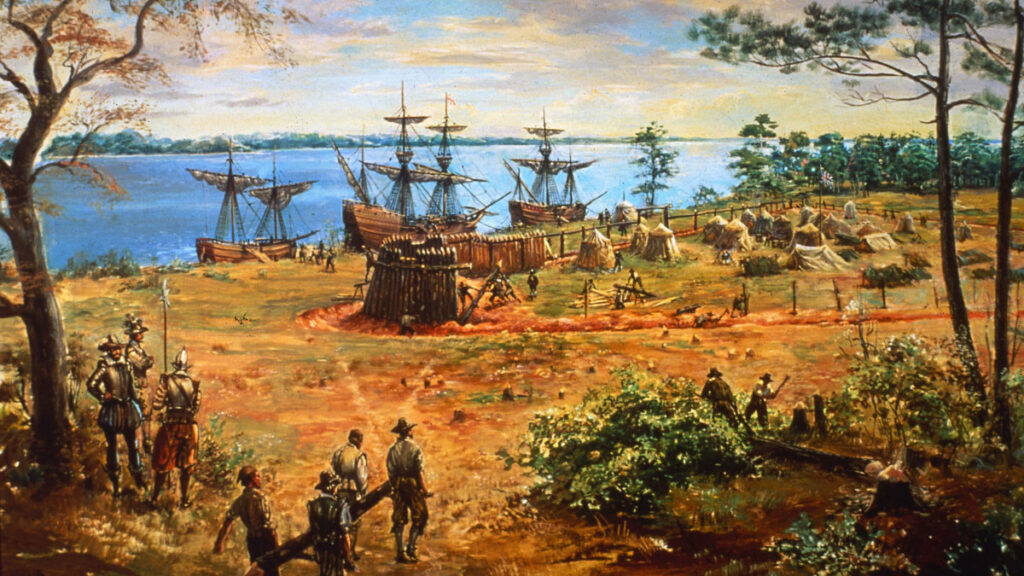
This search led me to a history that remains one of the most complex chapters of the American
experiment. Researchers like Vivek Bald, Geetika Rudra and few others have done profound work
to exhume these buried narratives, proving that the “Asiatics” (as the South Asians were then
called) were here long before the Independence.
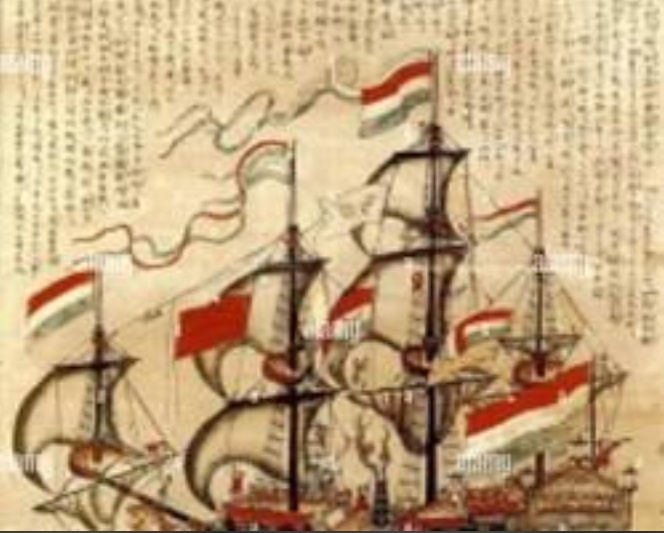
They arrived on the salt-stained decks of British East India Company ships as “Lascars”—sailors
who were the unsung engines of global trade. Their presence in the Colonies is a matter of several
public records of early years. They were Hindoos, Sikhs, Christians and Muslims – many from
Bengal. Tired of the extremely hard life of the ships, many Lascars jumped ship in ports like
Philadelphia or Charleston to disappear into the new world. Others arrived as indentured servants
of British businessmen and officers. They lived in a blurred social space between European
laborers and enslaved Africans.
By 1776, these Asian pioneers were a quiet part of the colonial landscape, but with a legal limbo.
Governed and taxed but denied citizenship, they remained “perpetual foreigners” because the
Naturalization Act of 1790 restricted citizenship to “free white persons”.
In 1908, attorney for one “Abdul Hamid” used an innovative argument that as a Kashmiri, he was
of “pure Caucasian stock”. He was granted citizenship. In 1909, “Bhicaji Balsara” argued that as a
Parsi of “pure-blooded” Aryan descent, he was anthropologically “white”. He too won, setting a
precedent that “Sakharam Ganesh Pandit”, a brilliant lawyer, followed in 1914. This strategy relied
on the then-settled “science” of the Aryan Migration Theory, which identified linguistic roots
connecting Sanskrit to Latin and Greek, suggesting North Indians and Europeans shared a
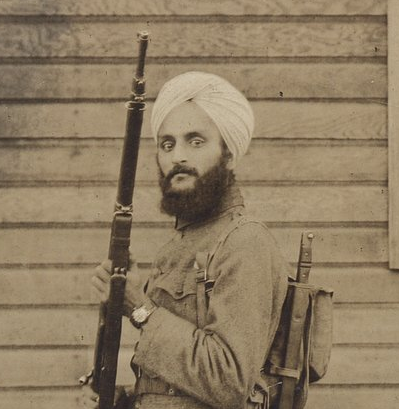
common Indo-Aryan or Caucasian ancestor. For years, these men used this evidence to live as
naturalized Americans, even serving in the U.S. Army during World War I. As Geetika Rudra notes
in “Here to Stay”, the claim to “whiteness” was not an abandonment of heritage, but a calculated
legal necessity in a nation that recognized only two race categories: white or colored.
The relief was temporary. This rationale was rejected in the 1923 Supreme Court case “United
States v. Bhagat Singh Thind”. Dr. Thind was a US army veteran with a PhD in English Literature
and Theology. Justice George Sutherland ruled he was not “white” in the eyes of the “common
man”. The Court’s decision to prioritize a “visible” definition of whiteness over scientific
classification laid bare the institutionalized prejudice of the era.
The consequences were tragic as the adverse decision was applicable to all Asiatics who were
previously granted citizenship. They lost their property and voting rights overnight. While
Sakharam Ganesh Pandit saved his status through a rare legal defense, others were destroyed. In
1928, “Vaishno Das Bagai”, a successful businessman stripped of his citizenship, took his own life.

The road back was paved by the relentless lobbying of Mubarek Ali Khan and J.J. Singh, two South
Asian activists who tirelessly campaigned in Washington to restore their people’s dignity. Their
efforts culminated in the Luce-Celler Act of 1946 – enacted as the U.S. sought to solidify a new
world order post-World War II and maintain ties with soon-to-be independent India and Pakistan
– allowing South Asians the permanent right to naturalize. It took 170 years for the law to finally
align with the self-evident truths of 1776.
In “Bengali Harlem”, Vivek Bald documents how early South Asian sailors settled in the Mississippi
Delta and Louisiana bayous, marrying into Black and Creole communities. Their heritage is a
hidden thread in the fabric of America. These South Asian pioneers and the resilient Lascars who
saw the promise of 1776 from the fringes, were part of the “We” in “We the People” long before
the law was willing to see them.
About the author:
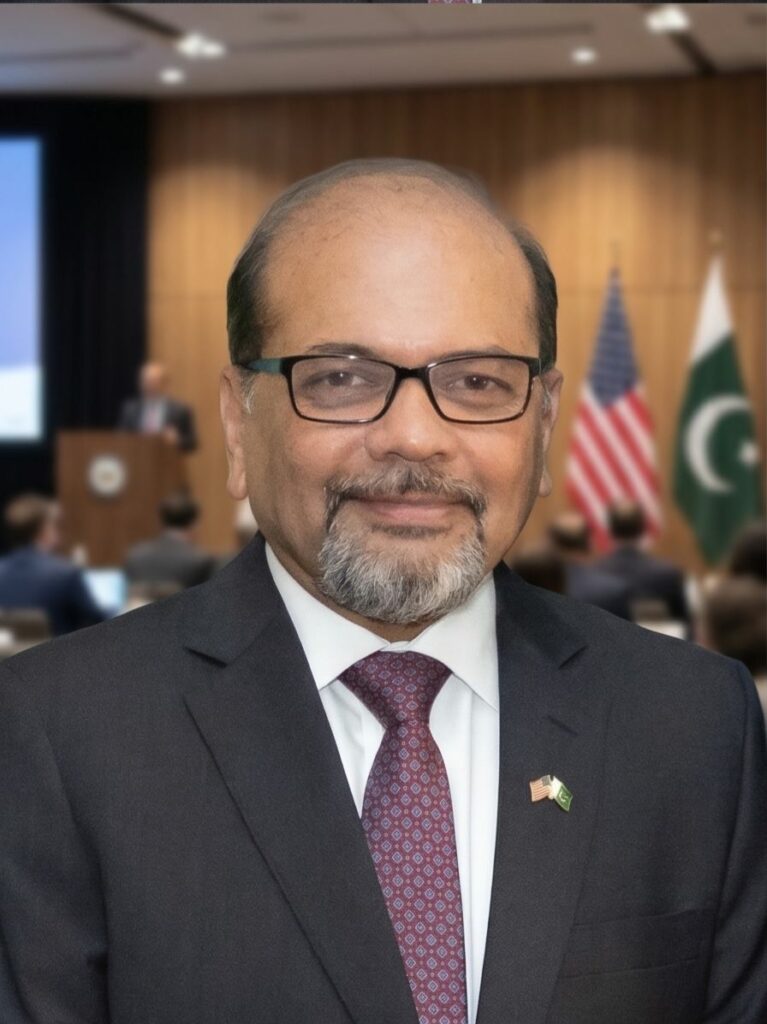
Mr. Siraj Narsi is a Business Finance Consultant, a writer and filmmaker. He also serves on the Boards of various community organizations in leadership and advisory positions, including as President of Pakistan Association of Greater Houston. Prior to moving to North America, he was a faculty member at IBA Karachi and also worked for Aga Khan Development Network in progressively senior positions. He has a Master Degree in Education from University of Texas at Austin and MBA from IBA Karachi.