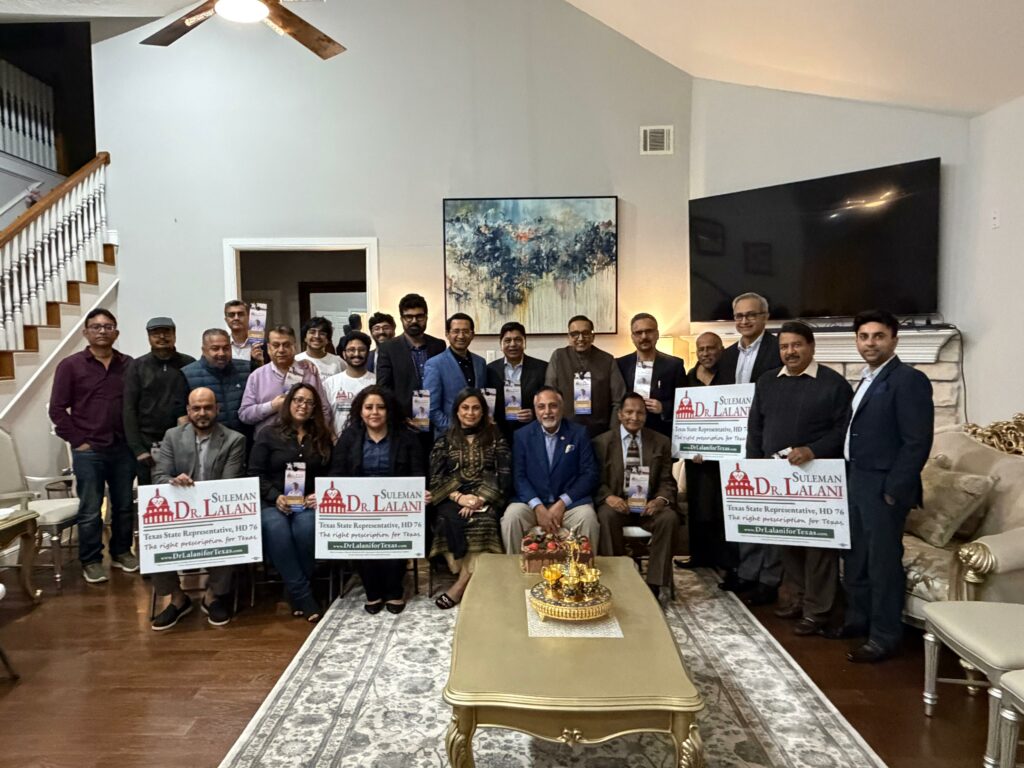
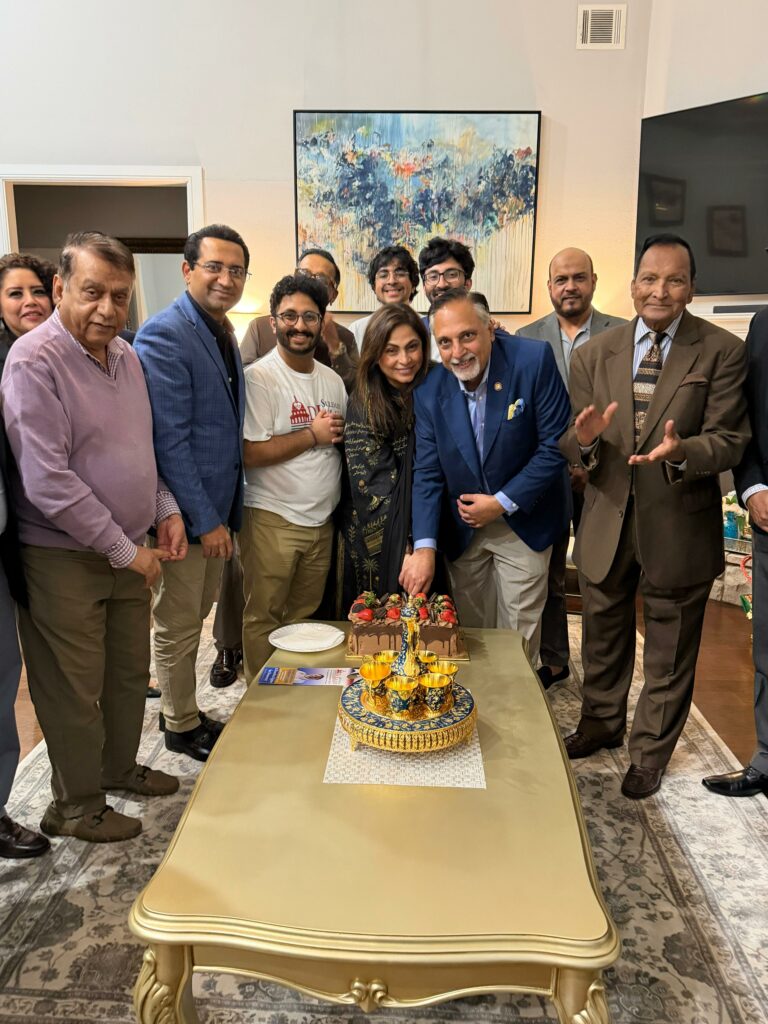
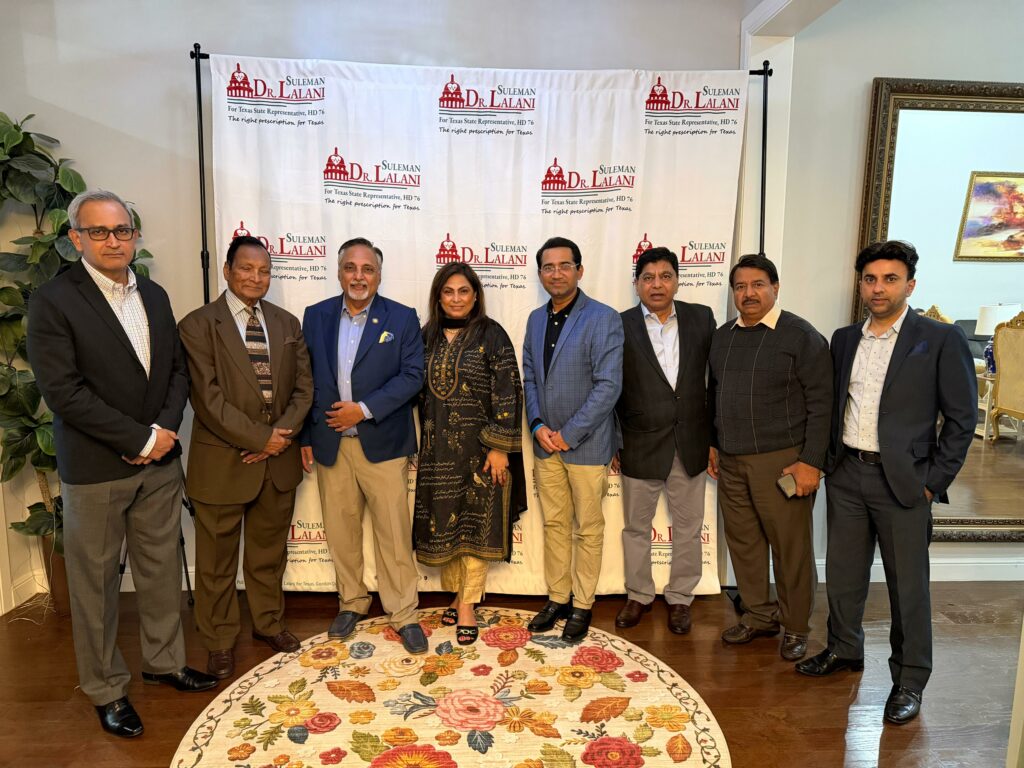
Texas (Monitoring Desk) An exclusive Interview with Dr. Suleman Lalani, the first Muslim and Pakistani-American elected to the Texas House of Representatives, sheds light on his journey from a medical professional to a state legislator, his legislative record, and his vision for strengthening democracy and political awareness in the United States.
Dr. Lalani, by profession a physician, explained that his decision to enter politics was driven by years of firsthand experience treating patients affected not only by illness but also by gaps in public policy.
According to him, many of the challenges faced by ordinary citizens — especially in healthcare, education, and social inclusion — required systemic solutions that could only be achieved through legislation.
This realization compelled him to step into public service and contest elections for the Texas State Legislature.
During his two consecutive tenures, each spanning 2 years, Dr. Lalani has actively participated in the legislative process.
He has tabled, authored, and co-authored dozens of bills covering a wide range of issues, including healthcare access, mental health services, education reforms, community safety, and cultural inclusion.
Several of these bills have successfully passed into law, reflecting his growing influence and effectiveness as a lawmaker in one of the most politically significant states in the U.S.
Speaking about his manifesto for contesting elections again as a state representative, Dr. Lalani emphasized healthcare affordability, inclusive education, protection of civil rights, and responsible governance.
He highlighted the need for policies that protect vulnerable communities, support working families, and ensure that democratic institutions remain transparent and accountable.
Beyond legislation, Dr. Lalani detailed his ongoing work for the community, including youth engagement programs, civic awareness sessions, and outreach initiatives aimed at encouraging political participation among young Americans, particularly those from immigrant and minority backgrounds.
He stressed that educating the new generation about democratic values and the importance of voting is essential for the long-term strength of American democracy.
Addressing the broader question of representation, Dr. Lalani underscored why it matters for Muslims and Pakistani-Americans to have their own representatives at local, state, and federal levels in the United States.
He noted that representation ensures that community concerns are heard directly in policymaking forums and helps counter marginalization by giving minorities a legitimate voice within democratic institutions.
Dr. Lalani’s journey stands as a significant example of political inclusion in the U.S., demonstrating how diverse backgrounds can enrich governance.
His story continues to inspire minority communities to engage with the political process and seek representation across all levels of parliament and public office in America.