By: P.J Khan Swati
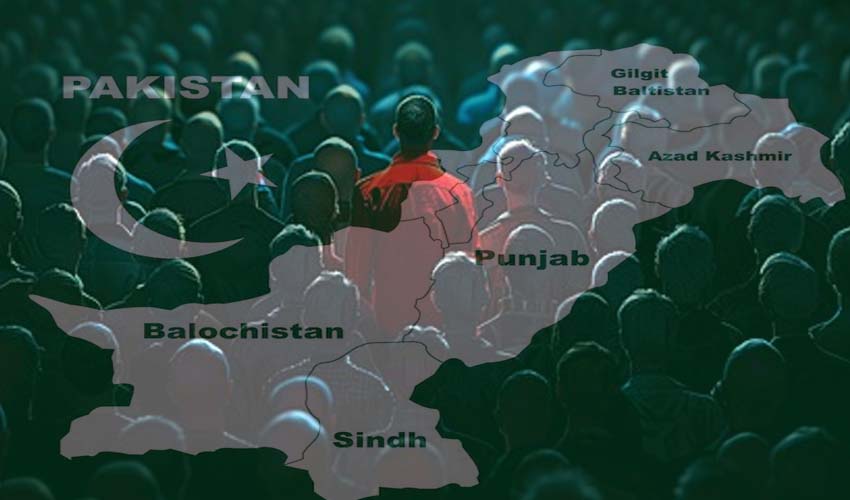
There are many reasons for the creation of more provinces, such as an increase in population size, greater awareness among the public of their rights and requirements, better communication, and the desire for a unique public identity by having a province of their own.
Increase in population is a major reason. In 1947, the population of the four provinces of present Pakistan was 33.5 million. Now, after 79 years, this population has increased to over 255 million; i.e., almost 7 to 8 times more population in the same four provinces. There appears to be a genuine reason that, in lieu of increased population, there should be more administrative units and ‘more’ provinces for easy administration and settlement of their issues.
Geographical Reasons
Another important reason is the geographical distance. If there are many provinces based on the geographical distance and administrative conveniences, it will be easier and more beneficial for the population to visit the provincial capital cities, and vice versa. More provinces will help the people in distant areas to benefit from more government offices and different institutions that the provincial government establishes in their respective capitals. Therefore, the establishment of more provinces will also improve development in all sectors of their own areas.
The Need of Time
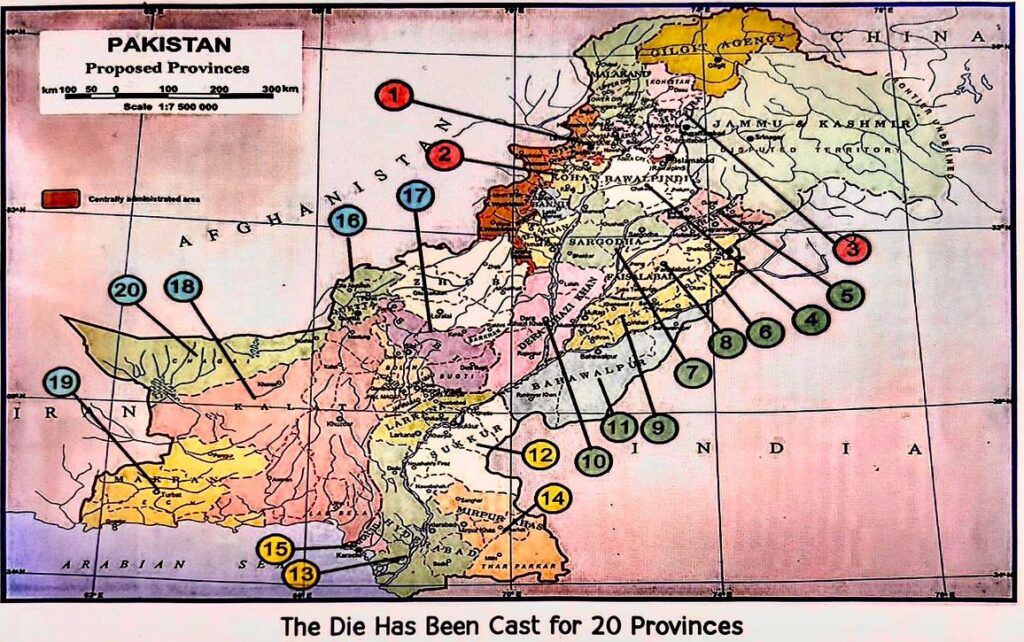
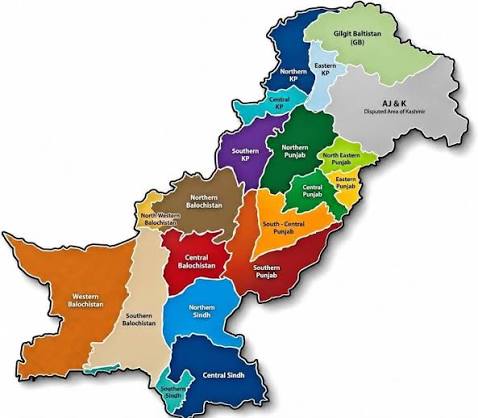
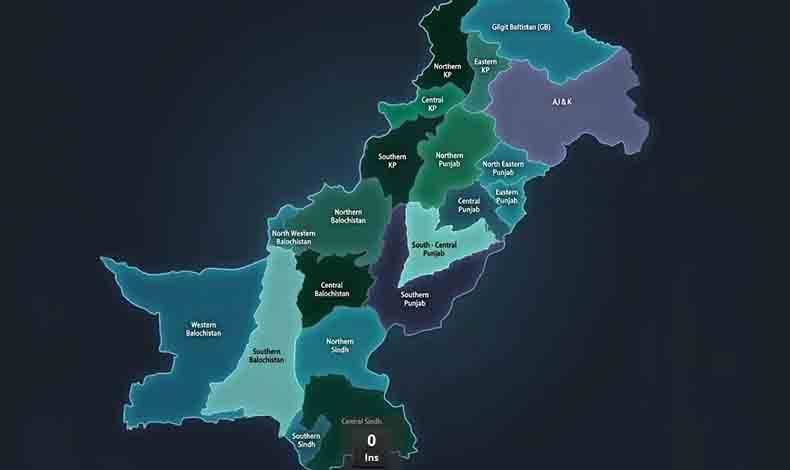
Establishing more provinces is the need of the present time and present population of Pakistan, which has increased more than seven times. The proposed province creation recommends that there should be at least 20 provinces: eight in Punjab, four in Sindh, five in Balochistan, and three in Khyber Pakhtunkhwa. The people will live and remain where they are, but they will become more active as they will feel that they are developing their own areas and the country as a whole will progress. Establishing more provinces does not mean that separate states are created. These provinces will remain where they are and very much a part of Pakistan, functioning exactly like the working of present provinces according to the Constitution of Pakistan.
Population
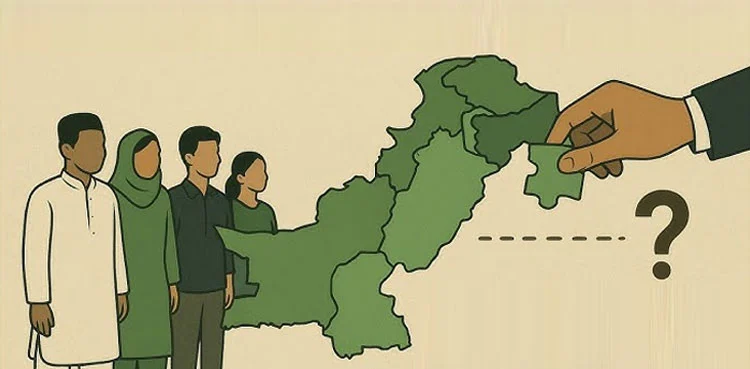
Another reason is the disproportionate allocation of funds based on population size rather than needs. Some provinces have very large populations, like Punjab, with nearly 128 million, while others have relatively small populations, like Balochistan, with about 15 million. The Minister of Finance allocates funds and resources on the basis of population size rather than according to needs. In this regard, Balochistan, for example, has only a small allocation made based on population, forgetting that the area of Balochistan is nearly double that of Punjab. This area must also be developed and cared for. Their requirements for funds far exceed the percentage of their population; therefore, more funds will be needed.
If there are five provinces in present Balochistan, they will individually make efforts to receive more allocations for the development of their own respective areas. Thus, they will develop their provinces, and the situation of law and order will also improve as a consequence of smaller areas of the new provinces.
Why 20 Provinces?
Why twenty provinces and not more or fewer? This can be discussed and debated. The figure of twenty provinces is based on administrative conveniences, short distances to the capitals, and population and area adjustments as far as possible. Therefore, the creation of twenty provinces will be a step in the right direction for proper development of the country.
Article 239 of the Constitution of Pakistan defines that the Provincial Cabinet can create a new district. To create a new province, however, the proposal first has to be approved by the Provincial Assembly, passed by a two-thirds majority, and later it will require a two-thirds majority in the National Assembly. However, the creation of twenty provinces is a viable prospect, as this proposal will fulfill the desire of almost all people of Pakistan. Such an amendment to the Constitution will easily be adopted by the National Assembly with the required two-thirds majority.
Tribal Area
Unfortunately, the tribal area is isolated from Pakistan and Khyber Pakhtunkhwa province because it lacks equal rights like the rest of Pakistan. It has been suffering due to FCR (Frontier Crimes Regulation) for over 111 years. The Supreme Court has been taking suo motu actions on various human rights issues in the country, but it has not considered how the people of FATA (Federally Administered Tribal Areas) are suffering. Therefore, FCR should be abolished, and the residents of tribal areas should be given equal rights like the rest of Pakistanis.
There are seven agencies in the tribal areas. These agencies should become the seven districts of KPK. It has been considered that FATA should become a separate province, but this may not be very suitable as the tribal area would still remain isolated and unable to take advantage of the settled districts. Therefore, it is essential and more useful that the seven agencies of the tribal area become districts of the province like any other district.
Possible Solution
The proposal is to create 20 provinces, which will also overcome the problems of provincialism of Punjabi, Sindhi, Balochi, and Pakhtoon. These proposed provinces are not based on ethnic or linguistic basis, as the Saraiki language will be spoken in 4 new provinces, Pashto in four provinces, and Balochi in four new provinces. The present ethnic and linguistic problem of Sindhi, Punjabi, Balochi, and Pashto will disappear.
The details of area and population are given in the table above. The population is based on the 2023 census and has gone up by about 40% in 15 years. Pakistan’s population, including Gilgit-Baltistan and Azad Kashmir, reached approximately 257 million in 2026.
By P. J. Khan Swati (an extract from published articles of Prof. Emeritus Dr. A. J. Khan, Sitara-e-Imtiaz)
Geographic Innovations: More Provinces of Pakistan
The 20 new provinces proposed will include the following districts in each province (with minor adjustments):
Khyber Pakhtunkhwa can become three provinces:
1- Northern Khyber Pakhtunkhwa
Districts: Peshawar, Mardan, Swat, Nowshera, Chitral, Lower Dir, Upper Dir, Buner, Shangla, Bajaur, Mohmand, and Khyber.
Area: 49,389 sq km
Population: 24,634,068
2- Southern Khyber Pakhtunkhwa Province
Districts: Kohat, Bannu, D.I. Khan, Karak, Tank, Lakki Marwat, Hangu, Orakzai, Kurram, North Waziristan, and South Waziristan districts.
Area: 57,538 sq km
Population: 10,033,295
3- Eastern Pakhtunkhwa Province (Hazara Pakhtunkhwa Province)
Districts: Abbottabad, Haripur, Mansehra, Battagram, Torghar, and Kohistan.
Area: 17,054 sq km
Population: 6,188,736
Punjab has been divided into eight divisions. These eight divisions have been carved so nicely that these can easily be converted into eight provinces, with minor modifications as follows:
1- North-Western Punjab Province (Potohar Punjab Province)
Districts: Attock, Rawalpindi, Jhelum, and Chakwal.
Area: 22,255 sq km
Population: 10,804,250
2- North-Eastern Punjab Province (Gujar Punjab Province)
Districts: Gujranwala, Gujrat, Sialkot, Narowal, Hafizabad, and Mandi Baha-ud-Din.
Area: 14,872 sq km
Population: 18,778,868
3- Lahore Punjab Province (Ravi Punjab Province)
Districts: Lahore, Kasur, Nankana Sahib, Sheikhupura, and Okara.
Area: 43,894 sq km
Population: 22,772,710
4- North-West Punjab Province (Sindh-Sagar Punjab Province)
Districts: Sargodha, Khushab, Bhakkar, and Mianwali.
Area: 26,358 sq km
Population: 9,591,275
5- Central Punjab Province (Faisalabad Punjab Province)
Districts: Faisalabad, Toba Tek Singh, Chiniot, and Jhang.
Area: 17,917 sq km
Population: 16,830,772
6- Southern Punjab Province (Baha-ud-Din Zakria Punjab Province)
Districts: Multan, Khanewal, Lodhran, Vehari, Sahiwal, and Pakpattan.
Area: 21,136 sq km
Population: 22,618,573
7- Western Punjab Province (DG Khan Punjab Province)
Districts: Dera Ghazi Khan, Layyah, Muzaffargarh, and Rajanpur.
Area: 38,781 sq km
Population: 12,892,465
8- South-Eastern Punjab Province (Bahawalpur Punjab Province)
Districts: Bahawalpur, Bahawalnagar, and Rahim Yar Khan.
Area: 45,588 sq km
Population: 13,400,009
Sindh province can easily become four provinces:
1- Northern Sindh Province (Khairpur Sindh Province)
Districts: Khairpur, Sukkur, Ghotki, Jacobabad, Shikarpur, Kashmore, Larkana, Naushahro Feroze, and Shahdad Kot.
Area: 47,988 sq km
Population: 13,103,747
2- Central Sindh Province (Hyderabad Sindh Province)
Districts: Hyderabad, Shaheed Benazirabad, Matiari, Dadu, Badin, Tando Allah Yar, Tando Muhammad Khan, Thatta, and Mirpur Khas.
Area: 61,785 sq km
Population: 16,278,870
3- Eastern Sindh Province (Thar-Parkar Sindh Province)
Districts: Tharparkar, Umerkot, and Sanghar.
Area: 38,937 sq km
Population: 5,930,649
4- Southern Sindh Province (Karachi Sindh Province)
Districts: Karachi.
Area: 3,527 sq km
Population: 20,382,881
Balochistan, though small in population, has a very large area — nearly half of Pakistan. For convenience of communication and the need for development, five new provinces can be formed as follows:
1- North-Eastern Balochistan Province (Pakhtunkhwa Baloch Province)
Districts: Quetta, Pishin, Qila Abdullah, Loralai, Qila Saifullah, Zhob, Sherani, Barkhan, Harnai, Musa Khel, and Ziarat.
Area: 65,550 sq km
Population: 6,387,353
2- South-Eastern Baloch Province (Sibi Baloch Province)
Districts: Sibi, Bolan, Dera Bugti, Kohlu, Jafarabad, Nasirabad, and Jhal Magsi.
Area: 42,512 sq km
Population: 3,283,447
3- Central Balochistan Province (Kalat Baloch Province)
Districts: Kalat, Khuzdar, Awaran, Mastung, and Lasbela.
Area: 93,810 sq km
Population: 2,407,747
4- Southern Balochistan Province (Makran Baloch Province)
Districts: Turbat, Gwadar, and Panjgur.
Area: 52,067 sq km
Population: 1,875,872
5- Western Balochistan Province (Kharan Baloch Province)
Districts: Kharan, Washuk, Chagai, and Nushki.
Area: 59,483 sq km
Population: 940,001

About the author:
P. J Khan Swati a community and Healthcare leader with experience across Medical Education, Hospital initiatives, Board advising, Film Producer, and commercial Real estate business development. Serves as Director International Frontier Medical and Dental college Pakistan and Ameripak Group Inc. USA.