By: Sada Cumber
The current moment in West Asia is not another cycle of crisis and relief. It is a test of whether the region can move beyond episodic de-escalation toward durable stability.
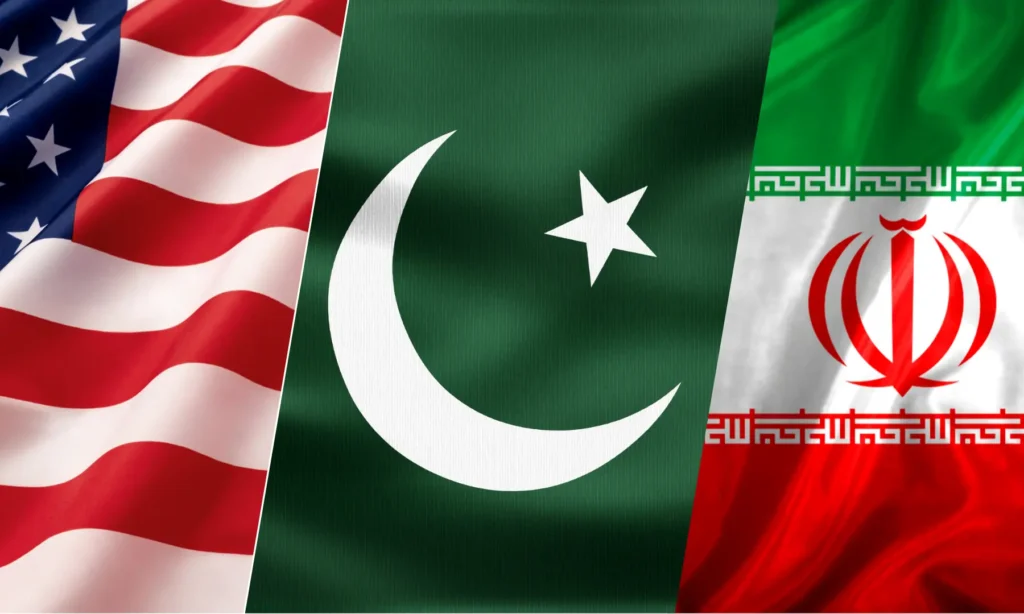
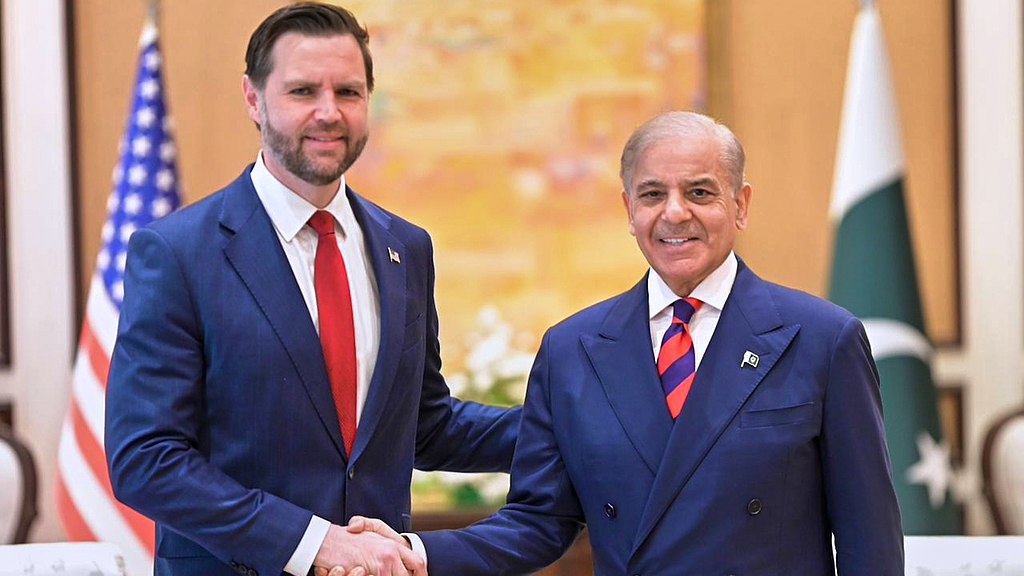
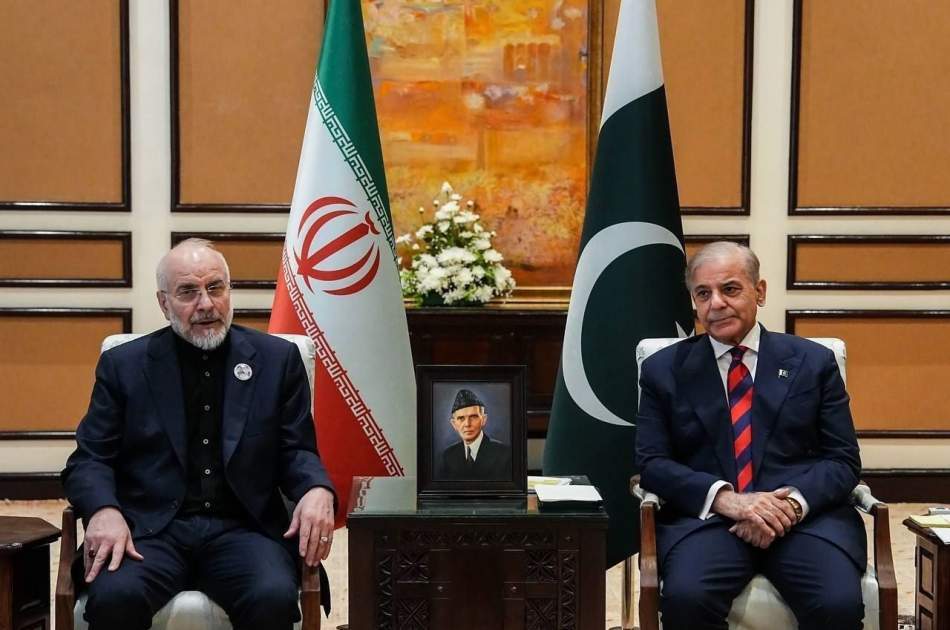
Recent diplomatic engagement — including indirect U.S.–Iran negotiations and the Islamabad talks — signals a shift in how regional actors are communicating. Channels remain open and coordination is increasing, even without agreement. This reflects a move from isolated exchanges toward more structured, multi-channel engagement.
Pakistan’s Emerging Role
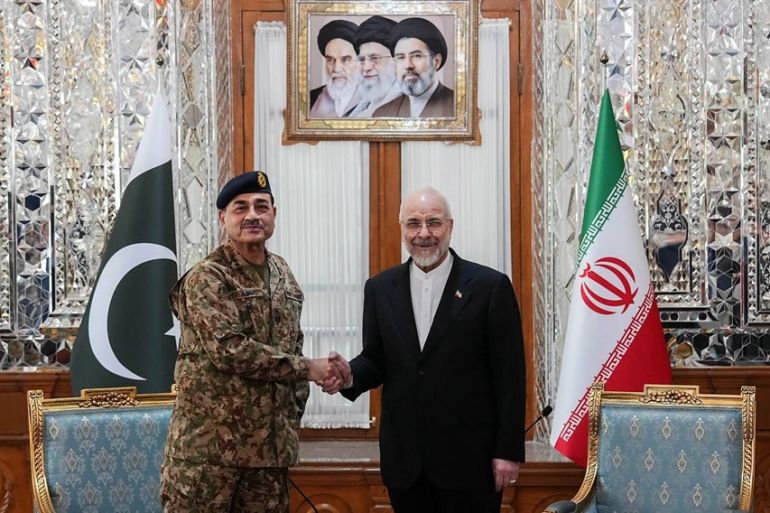
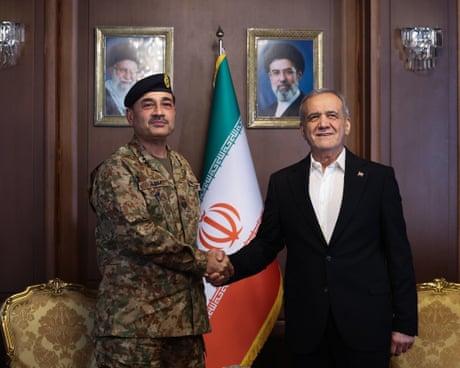
Pakistan’s role in this process is emerging as a defining feature. Positioned at the intersection of South Asia, Central Asia, and the Middle East, it is increasingly acting as a facilitator across geopolitical lines. The Islamabad talks highlight this shift, positioning Pakistan as both a connector and a platform for engagement.
A Fragile Pause, Not Stability
Yet this is not stability. What has emerged is a pause shaped by pressure rather than a resolution grounded in structure.
The current U.S.–Iran ceasefire remains fragile, exposed to disruption across multiple fronts. Strategic chokepoints such as the Strait of Hormuz remain central — not as closed routes, but as latent pressure points with systemic implications for global energy markets. Dialogue can create space, but it cannot sustain outcomes.
Limits of U.S.–Iran Engagement
Recent signals from indirect U.S.–Iran engagement further clarify the limits of this pause. Prior negotiations, largely facilitated through Oman, suggest areas of convergence, echoing elements of earlier frameworks such as the Joint Comprehensive Plan of Action (JCPOA), particularly around constrained enrichment and phased sanctions relief.
However, core issues remain unresolved, including the scope of Iran’s nuclear program and security in critical maritime corridors.
A Shifting Strategic Environment
The strategic environment has shifted. From Tehran’s perspective, a civilian nuclear program remains a sovereign right. At the same time, Iran is positioning itself within a broader geopolitical horizon, leveraging U.S. political cycles and the involvement of external actors such as China and Russia.
What was once a bilateral confrontation is now embedded in a wider, multi-actor system.
The Asymmetry of Disruption and Stability
This dynamic reflects a fundamental asymmetry: disruption is less costly to generate than stability is to sustain.
The United States, in parallel, is applying a countervailing logic — using military posture and economic pressure to constrain Iran’s strategic space and shape negotiation conditions. These efforts are further complicated by differing time horizons, with Iran able to absorb prolonged pressure while U.S. decision-making remains more constrained by domestic cycles.
A Systemic Standoff
The result is a calibrated standoff in which leverage is distributed rather than concentrated. External actors are increasingly involved, and no single channel is sufficient to produce resolution. What emerges is not a bilateral process, but a systemic dynamic that reinforces fragility.
Recurring Cycles, New Conditions
This pattern is not new. Periods of de-escalation have historically been followed by renewed instability. What is different now is the environment in which these cycles unfold.
Across the Middle East, Central Asia, and South Asia, the foundations that once supported stability are shifting. External guarantees are less certain, while regional relationships are more interconnected.
Disruption now moves rapidly across energy systems, trade routes, and financial flows, amplifying both risk and consequence.
The Need for Structured Stability
In this context, durable outcomes cannot rely on intermittent engagement. They require continuity, coordination, and institutional mechanisms capable of aligning security, economic, and political interests over time.
Pakistan as a Potential Anchor
Within this evolving landscape, Pakistan’s role is transitioning from facilitation toward potential anchoring. Its geographic position, cross-bloc relationships, and diplomatic flexibility give it the capacity to contribute meaningfully to regional stability.
Facilitation alone, however, is not sufficient. The central question is whether engagement remains episodic or becomes embedded within a framework capable of sustaining progress.
Anchor States and Regional Stability
Stability is increasingly shaped by capable regional anchor states — not dominant external powers, but actors able to influence whether surrounding systems stabilize or fragment. Pakistan is now operating within that space.
Whether this potential is realized depends on its ability to move beyond mediation toward institutional coordination.
An Interconnected but Ungoverned System
The region already functions as an interconnected system stretching from the Eastern Mediterranean through the Gulf into Central and South Asia.
Energy flows, trade routes, and financial linkages are deeply interdependent, yet the structures required to manage this interdependence have not kept pace.
The result is a gap between how the region functions and how it is governed.
Beyond Diplomacy: Building Frameworks
Addressing that gap requires more than diplomacy. It requires frameworks that integrate regional security, economic capacity, and institutional coordination in a way that endures beyond any single crisis.
If engagement remains unstructured, the region will continue to cycle between temporary stabilization and renewed instability under increasingly fragmented conditions. If anchored within a broader framework, it can support more durable outcomes.
The Defining Choice Ahead
The critical distinction is not between the presence or absence of dialogue, but between dialogue that dissipates and dialogue that accumulates into structured institutions and practices.
The direction taken now — by regional actors collectively — will determine whether the system evolves toward stability through structure or returns to instability under greater fragmentation.
About the author:
Sada Cumber is a National Security & Foreign Policy Expert.He served as the First U.S. Special Envoy to the OIC.