Washington: A wave of sharp criticism has emerged from across the American political spectrum following President Donald Trump’s latest speech on the ongoing Iran conflict, with lawmakers and political analysts raising serious concerns about leadership, strategy, and global consequences.
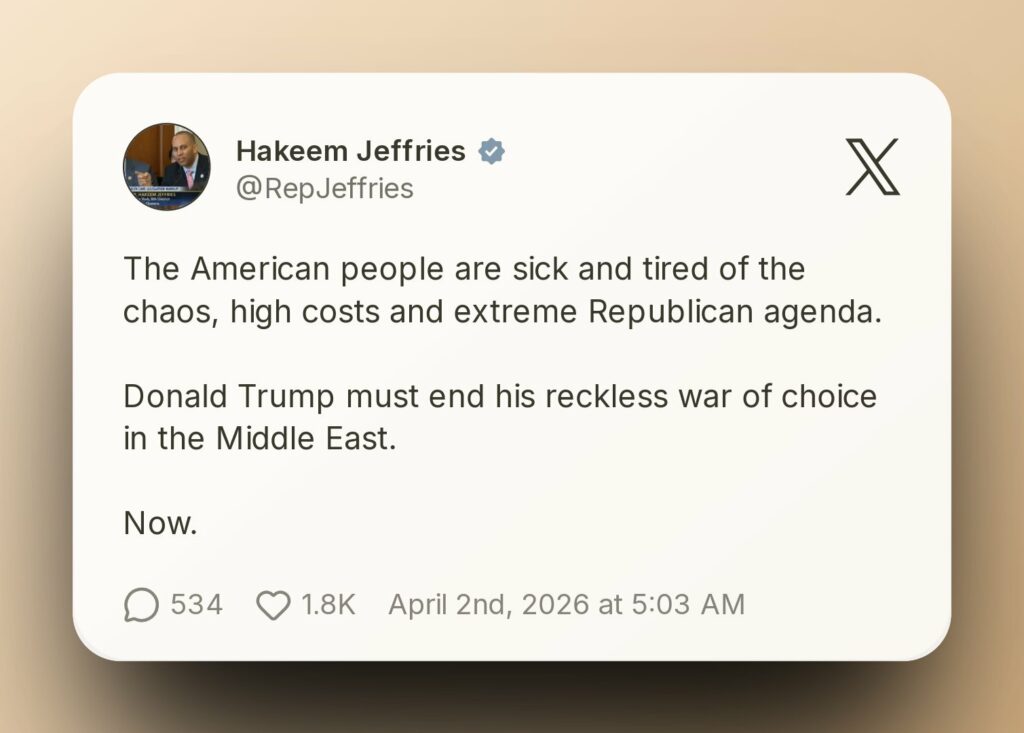
Senior Democratic leader Hakeem Jeffries strongly condemned Trump’s approach, stating that the American people are “sick and tired” of chaos, rising costs, and what he described as an extreme Republican agenda.
Jeffries called on Trump to immediately end what he termed a “reckless war of choice” in the Middle East, emphasizing the growing frustration among citizens over prolonged instability.
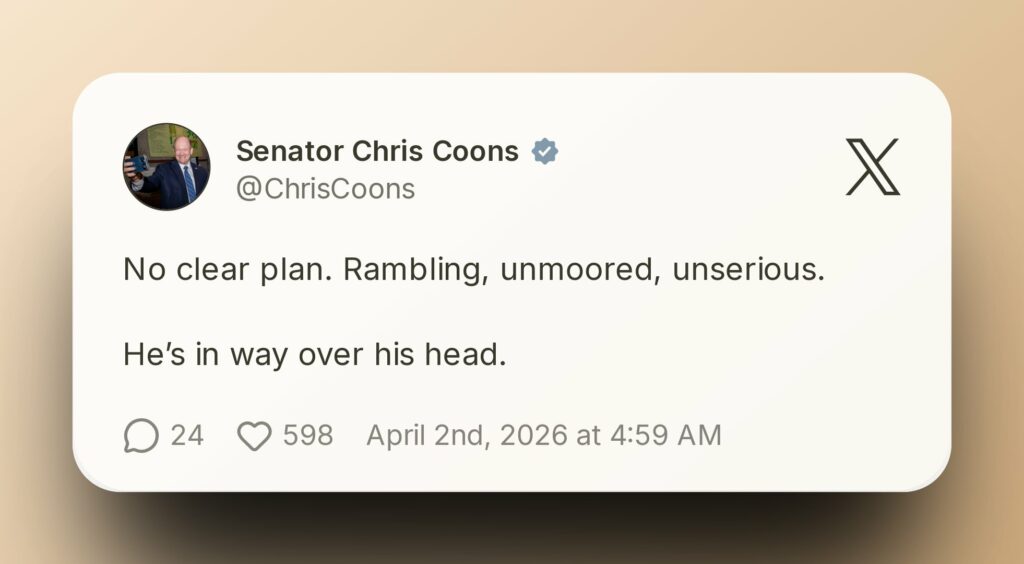
Echoing similar concerns, U.S. Senator Chris Coons criticized Trump’s speech as lacking any coherent strategy.
He described it as “rambling, unmoored, and unserious,” warning that the former president appears to be overwhelmed by the complexity of the situation.
According to Coons, the absence of a clear plan raises alarms about the direction of U.S. foreign policy.
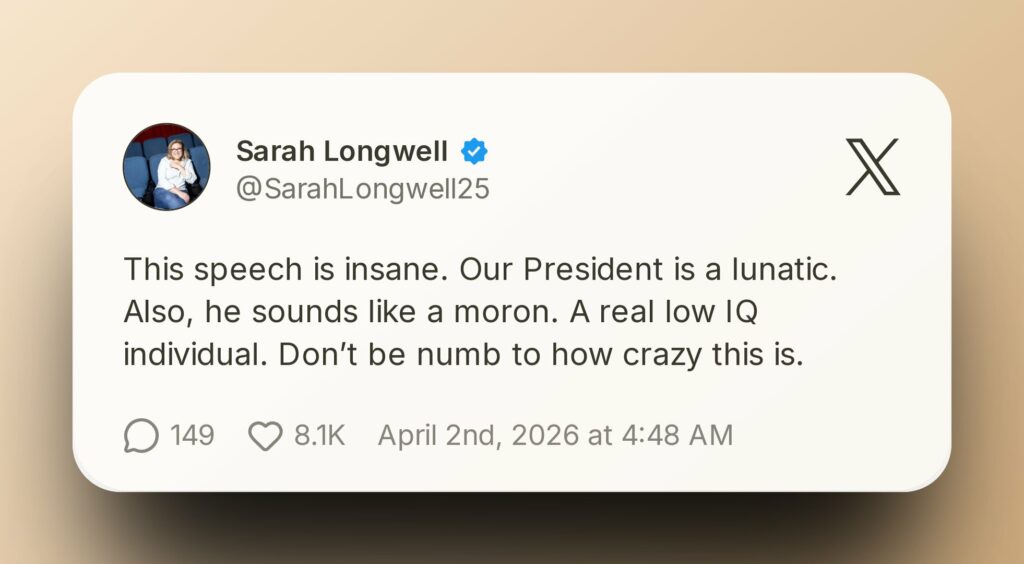
Political strategist Sarah Longwell delivered one of the harshest reactions, labeling the speech as “insane” and expressing deep concern over Trump’s judgment.
She argued that the rhetoric reflected a lack of seriousness and warned against normalizing what she described as dangerous political behavior during a time of international crisis.
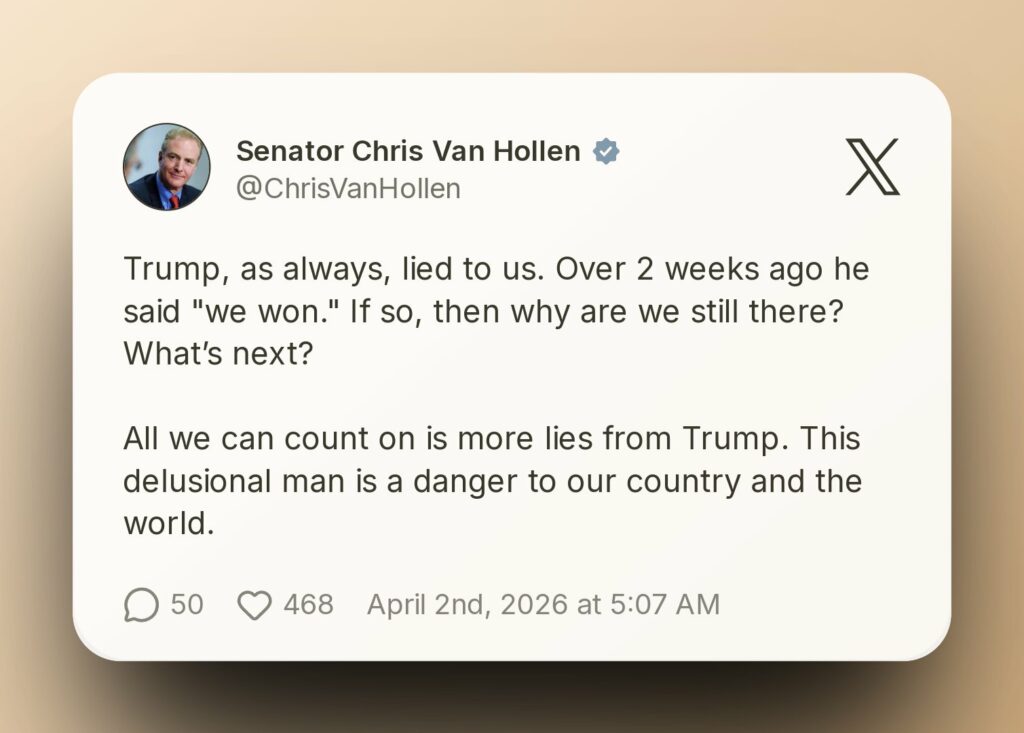
Meanwhile, Senator Chris Van Hollen accused Trump of misleading the public, pointing out contradictions in his earlier claims of victory. “If we already won, why are we still there?” Van Hollen questioned, warning that continued inconsistency and misinformation could further destabilize both domestic and international confidence.
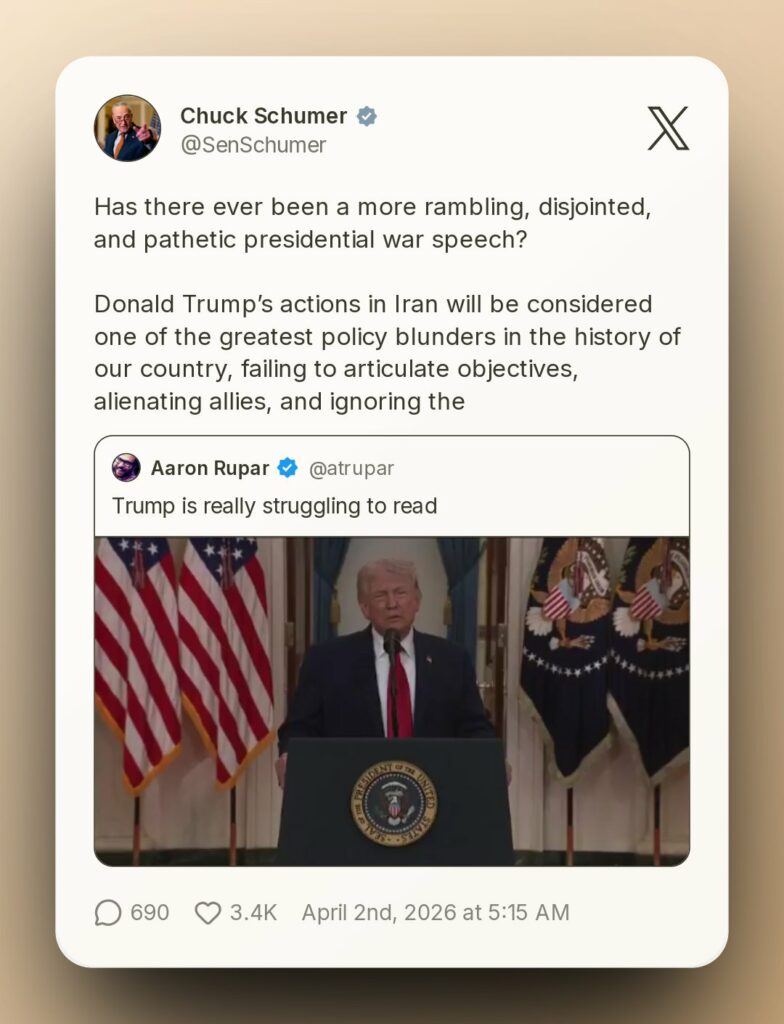
Adding to the growing criticism, Senate Majority Leader Chuck Schumer described Trump’s actions regarding Iran as a “historic policy blunder.”
He highlighted the lack of clear objectives, strained relations with allies, and what he sees as a fundamental unfitness to serve as Commander-in-Chief during such a critical period.
The collective backlash underscores deep divisions within U.S. leadership over the Iran conflict and raises broader questions about strategic clarity, accountability, and the long-term implications of America’s role in the Middle East.
As tensions continue to rise, the demand for a clear and responsible policy direction appears more urgent than ever.