Georgetown University – Washington, D.C. April 20, 2026
Ambassador Sada Cumber
National Security & Foreign Policy Expert
First U.S. Special Envoy to the OIC
A Moment of Geopolitical Transition
In periods of geopolitical transition, history does not reward the largest states. Nor does it always reward the strongest militaries. It rewards nations that understand in what direction the international system is moving, and in positioning themselves before others are forced to react.
Pakistan is now entering such a moment.
Over the past weeks, I have outlined three concepts in shorter form, addressing issues relating to Operation Epic Fury.
Today, I am taking a step further in sharing Pakistan’s role, from peace negotiator to structure architecture in the international system.
Structural Shift in the Global Order
What we are witnessing today is not a sequence of isolated developments, nor is it simply noise amplified by commentary; it is a structural shift in how the international system organizes itself. The United States remains the most powerful country in the world—and will continue to be so for a long time—yet the system around it is changing in ways that are no longer incremental but directional, shaped by the rise of China, the assertion of regional actors, and the gradual erosion of the system led by the United States for the last eighty years.
What we are seeing, therefore, is not disorder but transition—and, more importantly, not just geopolitical transition, but civilizational reorganization.
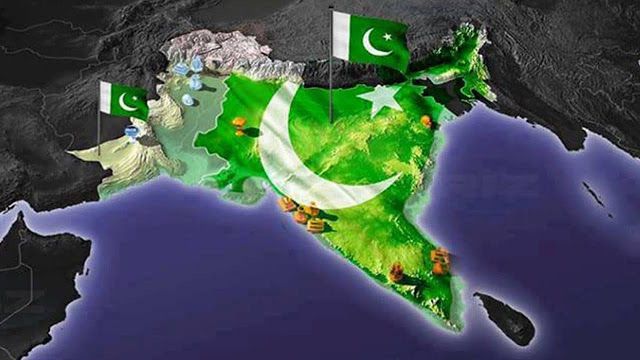
A System of Interconnected Flows
What we see here reflects that shift, not as a map of countries but as a map of flows in energy, trade, and maritime routes that now intersect across what has become a single strategic system stretching from the Eastern Mediterranean through the Gulf and into South and Central Asia—a system that behaves differently under pressure because it is no longer composed of separate regions but of interconnected structures that must now regulate collectively.
Historical Context and Long-Term Patterns
To understand the depth of this moment, however, we need to step back further, because the tensions we observe today are not recent developments but the continuation of a longer historical arc—one that shaped not only how power was exercised but how it was justified.
Going back to the fall of Muslim rule and the surrender of Granada, we see early narratives that shaped perceptions long before the formation of the United States, at a time when Thomas Jefferson was still debating whether a Muslim could be elected president, all before the Constitution was written.
The point here is not the detail but the pattern, because these dynamics are not new; they are embedded, and what is embedded shapes how systems behave across centuries.
Civilizational Reorganization
Today, we are seeing the consequences of that long arc. The West is experiencing pressure, not collapse. China is rising with coherence and at a scale that cannot easily be absorbed, and regional actors are beginning to assert themselves with increasing independence.
What we are witnessing now is a gradual movement toward civilizational-scale organization. While the United States is defining itself more internally, China operates as a long-term civilizational state, and the Islamic world—despite its fragmentation—carries over 1,400 years of historic continuity.
The Question of the West
This raises an important question: if we are moving toward civilizational structures, then what exactly is the “West” today?
For decades, we spoke of a Western system as a coherent system, yet that coherence is no longer evident. The United States increasingly defines itself on its own terms, while Europe remains economically integrated but politically fragmented and strategically uncertain—a divergence already visible within alliances that once appeared strong.
What we are seeing is not collapse but gradual strategic decoupling, with interests, priorities, and threat perceptions no longer perfectly aligned.
Regional Pressures and Endurance
Recent events in the Gulf region reinforce this shift, particularly when we look at what can be described as the present moment of “Operation Epic Fury,” where, for more than forty years, countries such as Iran have been subjected to sustained economic and military pressure, yet remain operational, adaptive, and influential—not because of conventional dominance but because of endurance, solidity, and strategic will.
This reflects a deeper principle: power is not defined only by systems and institutions, but by the ability of a society to absorb pressure, sustain unity, and continue operating under constraint.
The current moment in West Asia is not another cycle of crisis and relief. It is a test of whether the region can move beyond episodic de-escalation toward durable stability and peace.
The recent Islamabad talks add a critical layer, signaling a shift from crisis management toward more structured engagement and, inshallah, soon an agreement to bring an end to this war. Actors are communicating through coordinated channels rather than isolated contacts. This falls short of a framework but marks a change in conduct.
Pakistan’s Strategic Position
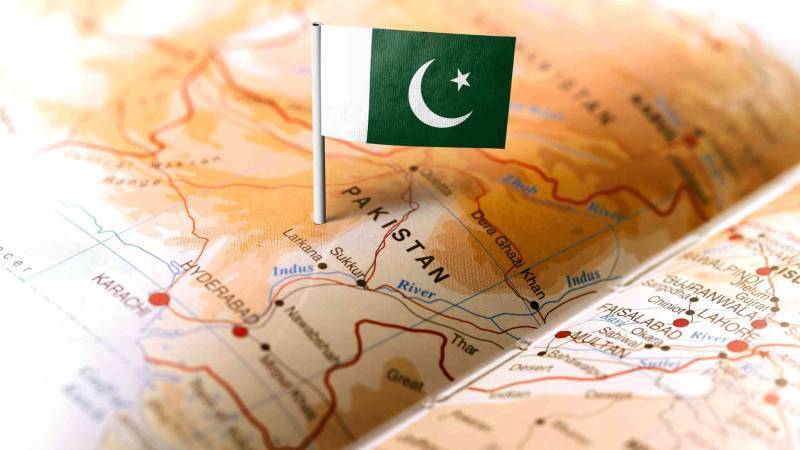
Today, Pakistan occupies a unique position at the intersection of South Asia, Central Asia, the Gulf, and global sea routes, connecting energy corridors, trade systems, and strategic pathways in a way that few countries can replicate.
Connection, on its own, does not produce stability.
In highly interconnected systems, connection without structure can amplify instability rather than reduce it, because disruptions travel faster, pressures compound more rapidly, and fragmentation becomes more difficult to contain.
The Role of Anchor States
What stabilizes such systems is not connectivity alone, but the presence of anchor states: countries that are able not only to connect different parts of the system but to absorb shocks, maintain continuity, and sustain engagement across competing actors.
This is where Pakistan’s role must be understood.
Pakistan’s position is not simply geographic, and it is not incidental. It is structural. It sits at the convergence of multiple systems where energy flows from the Gulf, trade corridors linking Asia, overland routes into Central Asia and Western China, and maritime access through the Arabian Sea all converge.
At the same time, Pakistan maintains relationships across multiple power centers—Washington, Moscow, Beijing, Tehran, and the Gulf—without being structurally excluded from any of them.
That combination is rare, and in a fragmented system, rarity translates into strategic value.
Security, Development, and Stability
What this means in practical terms is that Pakistan is not merely a connector of flows, but a potential stabilizer of the system itself, capable of maintaining continuity where fragmentation would otherwise prevail and enabling coordination where alignment is not guaranteed.
What defines an anchor state is its ability to combine security, industrial capacity, and technological development into a single, integrated system that can operate under pressure and sustain long-term stability.
This is why the relationship between security and development must be understood differently.
Security architecture does not follow economic development; it precedes it.
Without credible deterrence, capital remains cautious, infrastructure remains vulnerable, and long-term investment lacks the confidence required to scale. Stability is not a byproduct of development; it is the condition that makes development possible.
Comparative Models of Success
Examples of countries that have successfully navigated similar transitions include Singapore through governance, Türkiye through industrial capacity, the United Arab Emirates through capital deployment, and Israel through security-driven innovation. All of these countries have demonstrated one consistent principle: when security, industry, and technology are aligned, capability compounds over time.
Toward an Integrated Regional Framework
The opportunity for Pakistan is not to replicate any single model but to integrate all these elements within its own context by leveraging its scale, workforce, geography, and security architecture to build a system that is internally coherent and externally relevant.
Coordination between Türkiye, Saudi Arabia, the Gulf, and Pakistan is no longer episodic; it is becoming structural. Defense cooperation, technological exchange, and strategic alignment are evolving into patterns that reflect shared interests in stability rather than temporary convergence.
This is what I define as the Islamic Security Cooperation Alliance (ISCA).
It is not a formal alliance in the traditional sense, nor is it directed against any external actor or built on ideological uniformity. It is a system emerging from necessity rather than design.
Pakistan as an Anchor State
In this framework, Pakistan’s role evolves from participant to that of an anchor.
An anchor state in such a system is not one that controls outcomes but one that enables them by maintaining relationships across competing actors, providing stability through credible deterrence, and serving as a platform through which coordination can occur.
In an environment where fragmentation is growing, this kind of positioning becomes not just valuable but necessary.
Resource Power and Structural Imbalance
We are often told that the West remains the engine of the global system, but the underlying data suggests something more complex. Across the Islamic world, comprising 57 Muslim-majority countries spanning this broader region, there is a concentration of resources that is structurally decisive: approximately 60 percent of global oil reserves, more than half of global natural gas, and, in key commodities such as rubber and palm oil, shares exceeding 70 percent.
What this tells us is that the physical foundation of the global economy is already distributed differently from the financial system that governs it. It is precisely in that divergence that structural imbalance becomes visible.
The Need for Institutional Architecture
When measured in real economic terms through purchasing power, the combined scale of these economies approaches $30 trillion, placing it at a level comparable to that of the United States. Yet that scale is not proportionally reflected in global financial influence, capital allocation, or institutional mechanisms.
The resources are there, and the value clearly exists, but what is missing is structure.
That translation requires architecture, where capital is not merely invested but structured, governed, and aligned through institutional mechanisms such as a Regional Stabilization Authority (RSA) and a Regional Stabilization Fund (RSF), enabling the conversion of capital into capability, and capability into sustained security power.
A Multipolar Future
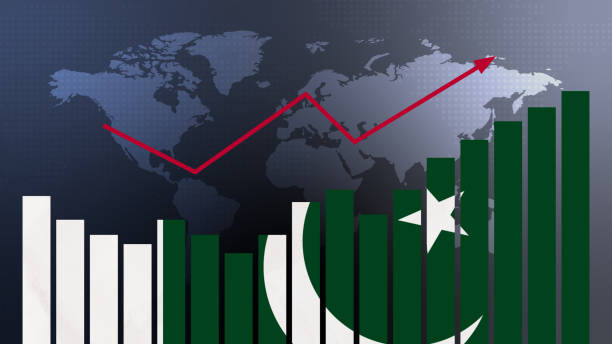
The era of the West is entering a phase of relative decline—not collapse, but rebalancing—where dominance gives way to distribution, and previously stable systems begin to fragment as a bipolar world shifts to a multipolar system.
We are moving toward a world in which global power remains important, but regional systems become decisive—not in opposition but in parallel—where geography creates relevance, but coordination creates power.
A Call for Strategic Clarity
Ultimately, the question is not whether Pakistan has a role, but whether Pakistan defines that role or allows it to be defined by others.
The moment in which we are living demands clarity, not only at the level of states but across the broader civilizational community.
The developments described as “Operation Epic Fury” are not episodic. They are signals of structural stress within the Muslim community that has not yet converted its scale into coordinated capability.
The Path Forward
For the global Muslim community, the implication is unambiguous: fragmentation is no longer sustainable, and coherence is no longer optional.
This does not require uniformity. It requires discipline. Differences in faith interpretation must not translate into division, and traditions must not be advanced through coercion or conflict.
At the same time, Muslim-majority countries must operate with strategic clarity. In a multipolar system, engagement across defense, economic, and technological domains is essential, and partnerships must be determined by national interest rather than constrained by outdated assumptions.
History provides a clear warning. Other civilizations endured prolonged internal conflict before reaching stability—often at extraordinary human cost, such as the Thirty Years’ War within the Christian world. That stability emerged not from victory, but from the recognition that continued internal conflict was untenable.
There is no reason for Muslims to follow that path.
Execution as the Defining Factor
More than fourteen centuries into our own history, the capacity to act differently already exists. What is required now is execution.
First, there must be sustained coordination among key Muslim-majority countries in areas where interests already converge, particularly in defense, economic development, and technology.
Second, institutional mechanisms must be developed to align capital with long-term capability.
Third, anchor states must take on a more deliberate role in stabilizing the system.
Fourth, security, industry, and technology must be integrated into coherent systems.
Finally, coexistence must be recognized not as a concession, but as a strategic necessity.
Conclusion
If fragmentation continues, instability will not diminish—it will deepen. The cost of delayed alignment will grow over time.
The framework exists, the resources are already in place, and the scale is undeniable. What has been missing is not capability, but alignment and execution.
If acted upon, this moment can become a turning point. If not, it risks extending a cycle of fragmentation that will shape outcomes for generations.
Again, the question is not whether Pakistan has a role, but whether Pakistan defines that role or allows it to be defined by others.
The framework now exists, and the question is execution.
This article is adapted from keynote remarks delivered by Ambassador Sada Cumber at the Pakistan-United States Conference at Georgtown University in Washington D.C. on April 20, 2026.