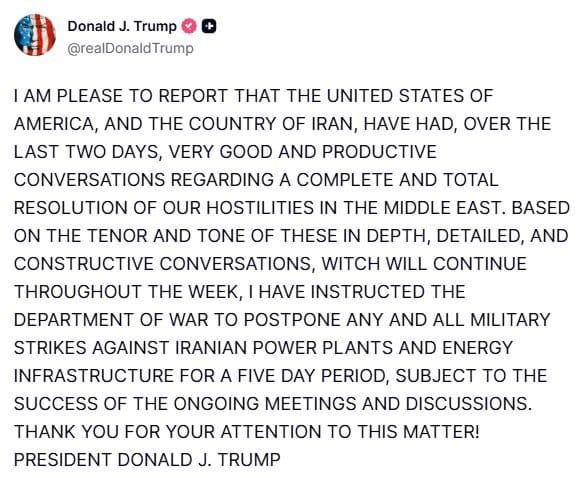
Washington: In a major shift reflecting the growing strength of Iran’s strategic posture, U.S. President Donald Trump has announced a 5-day pause on planned military strikes targeting Iran’s energy infrastructure.
The move comes after Tehran made it clear that any attack on its power plants would trigger a wide-ranging and decisive response across the region.
According to Trump’s statement, the United States and Iran have held “productive” discussions over the past two days, leading Washington to temporarily step back from direct military escalation.
The pause, however, appears to follow increasing pressure created by Iran’s firm warning that it would not tolerate attacks on its sovereignty or critical infrastructure.
Iran has consistently maintained that its actions are defensive and proportionate.
Officials in Tehran have warned that if its energy facilities are targeted, it will respond by striking equivalent infrastructure across Israel and U.S.-linked assets in Gulf countries.
This doctrine of “proportional retaliation” has emerged as a key pillar of Iran’s military strategy in the ongoing conflict.
The current tensions were sparked after U.S. and Israeli strikes targeted Iranian energy sites, including key gas infrastructure, escalating the situation into a broader regional confrontation.
In response, Iran signaled that it would defend itself by targeting strategic economic assets, particularly those connected to its adversaries.
Analysts suggest that Trump’s decision to delay strikes reflects a recognition of Iran’s deterrence capability.
Tehran’s ability to threaten vital energy corridors, including Gulf oil routes and infrastructure, has raised global concerns about energy security and economic stability.
Despite heavy attacks, Iran has demonstrated resilience, maintaining operational command structures and continuing its strategic responses. The pause in U.S. strikes is being viewed by many observers as a tactical retreat aimed at avoiding further escalation in the face of Iran’s credible counter-threats.
As diplomatic engagements continue, the coming days will be critical in determining whether this temporary pause leads to de-escalation or merely delays a larger regional confrontation.